Decanting has a reputation problem. It gets treated like theater for old, expensive bottles, when the most dramatic improvement often comes from a young red that cost less than dinner.
The useful question is not, “Is this wine important enough to decant?” It is, “What problem am I trying to solve in the glass?” If the wine feels hard, smells closed, or carries gritty sediment, a decanter can help. If it already smells graceful and fragile, the decanter may be too much.
Table of Contents
- Why Young, Affordable Wines Demand the Decanter Most
- The Dual Purpose of Decanting: Oxygenation vs. Separation
- How to Identify Which Bottles Actually Need Decanting
- Selecting the Right Decanter and Preparation Tools
- The Sommelier's Method: Decanting Older Vintages for Sediment
- The Splash Pour: Decanting Younger Vintages for Aeration
- A Complete Walkthrough: Decanting a 10-Year-Old Barolo
Why Young, Affordable Wines Demand the Decanter Most
The contrarian answer is also the practical one: young, affordable reds often need the decanter more than the famous old bottle does.
Recent-vintage Cabernet Sauvignon, Syrah, Nebbiolo, dense Malbec, and young Bordeaux-style blends can come out of the bottle tense and unyielding. The fruit is there, but it sits behind tannin, alcohol warmth, and sometimes a faintly reductive aroma. A decanter gives that wine a larger surface of contact with air, which can make its tasting notes easier to read.
Start with a small test. Pour about an ounce right after pulling the cork. If the finish dries your gums for more than 10 seconds or so, or if the fruit seems muted behind alcohol heat, move the bottle to a decanter.
Volatile sulfur notes are another clue. Struck match, rubber, or onion skin aromas that fade after 5 to 10 minutes in the glass usually point toward a bottle that will benefit from a more forceful decant. If the wine smells like vinegar, nail polish remover, or wet cardboard, oxygen will not rescue it; decanting can make those faults louder.
The Dual Purpose of Decanting: Oxygenation vs. Separation
Decanting does two different jobs, and mixing them up causes most of the trouble.
Oxygenation changes aroma and texture
For young wines, the goal is aeration. Oxygen contact can encourage tannins to feel less sharp and can help aromatic compounds rise out of a closed wine. UC Davis Wine Server discusses chemical changes during wine aeration as part of the broader science of wine quality, including how wine chemistry shifts after exposure to air.
In practical dinner terms, aeration is most useful in the first 20 to 120 minutes after opening. A tannic red that seemed angular at first can move toward a rounder, more aromatic profile during that window.
Separation keeps sediment out of the glass
For mature wines, the goal is often separation. Sediment can show up as dark flakes, fine powder, or a muddy streak near the shoulder of the bottle while pouring. It is harmless, but it can make the last glass taste bitter, dusty, and gritty.
Tartrate crystals are different. They often look like glassy shards or red-brown crystals clinging to the cork or punt. They are crystallized tartaric acid salts, not broken glass.
Key Takeaway: Young and closed usually means aerate. Old and visibly dusty usually means separate. The same decanter can do both jobs, but the pour and timing should change.
How to Identify Which Bottles Actually Need Decanting
Assess the bottle in this order: structure, age, then production style. Structure comes first because tannin responds fastest to air.
Strong candidates for aeration
- Cabernet Sauvignon
- Syrah
- Nebbiolo
- Petite Sirah
- Mourvedre
- Young Rioja Reserva
- Young Bordeaux-style blends
- Dense Malbec from warm sites
These wines can feel firm even when they are not expensive. A wide-bottom decanter holding a standard 750 ml bottle spreads the wine into a shallow layer, so aroma release is noticeably faster than leaving the wine in the bottle neck for the same 30 to 60 minute window.
Moderate candidates
Sangiovese, Tempranillo, Grenache-led blends, structured Zinfandel, and fuller Gamay from serious cru-level bottlings can benefit, but start gently. Try 30 to 60 minutes instead of several hours.
Some whites deserve a short decant too. White Burgundy, Chenin Blanc, Semillon, mature Riesling, and full-bodied white Rhone-style blends can open nicely in a clean, narrow decanter for 15 to 30 minutes.
Warning: While decanting benefits many young reds, fragile older Pinot Noir, mature red Burgundy, and many wines past 20 years of age can lose their remaining fruit within 30 minutes of open-air exposure. Taste immediately and keep the decant brief.
A mature red Burgundy is the classic cautionary bottle: it can smell beautiful on opening, then lose its cherry and floral notes after an extended wide-base decant. In that case, sediment removal and immediate service are safer than a two-hour aeration plan.
Selecting the Right Decanter and Preparation Tools
Tool choice follows purpose. A wide-based decanter is for oxygen. A narrow, upright decanter or small carafe is for protection and clean service.
Choose the shape
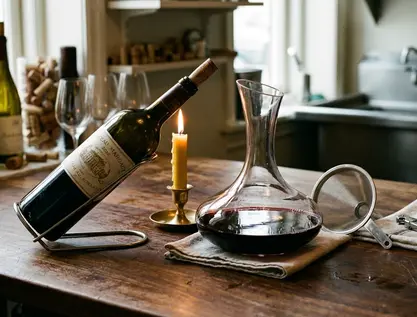
- Wide-based decanter: Use for young reds when the planned air time is 60 to 240 minutes.
- Narrow decanter or small carafe: Use for mature bottles when the service window is 10 to 45 minutes.
The wide vessel is not just decorative. It expands the wine’s contact with air, which is exactly what a tight young wine needs. The narrow vessel does the opposite; it lets you leave sediment behind without exposing a delicate wine to more oxygen than necessary.
Prepare the light and glass
A candle is traditional, but a smartphone flashlight works well. Place it an inch or two below the bottle neck so you can see dark sediment approaching the shoulder during a slow pour.
Smell the decanter before using it. Rinse with hot water if needed. Even a faint detergent aroma can flatten fruit and add a bitter, soapy finish to the first glass.
Pro Tip: If the empty decanter smells like a cabinet, towel, or dish soap, rinse it again and let it drain upside down for a few minutes before the wine goes in.
The Sommelier's Method: Decanting Older Vintages for Sediment
This method is slow because the wine is not the thing being rushed. The sediment is.
- Stand the bottle upright for 12 to 24 hours. Gravity needs time to pull fine particles down to the punt. If the bottle was recently shipped or moved from off-site storage, use the longer end of that range.
- Remove the entire foil capsule. Do not cut only the top disc. Exposing the shoulder and lower neck gives you a clear view of what is coming.
- Open gently. Mature corks can be soft or brittle, so work slowly and keep the bottle steady.
- Place the light source under the neck. A candle or flashlight should illuminate the wine stream without heating the bottle.
- Pour in one slow stream. Stop as soon as the clear stream turns cloudy, smoky, or dark with flakes.
Expect to leave the final ounce or so in the bottle when sediment is heavy. Forcing that last pour usually clouds the entire decanter, and the last glass pays the price.
Troubleshooting older bottles
- If the cork breaks, keep the bottle upright and remove the remaining cork in pieces rather than shaking the wine.
- If sediment reaches the neck early, stop early. Clean wine in the decanter matters more than volume.
- If the wine smells delicate and complete right away, serve it soon instead of waiting for a long rest.
The Splash Pour: Decanting Younger Vintages for Aeration
The splash pour is for force, not ceremony. Pour the wine vigorously so it strikes the sides of the decanter and spreads across the glass. The aim is immediate oxygen integration.
For standard young reds, plan on 60 to 120 minutes and taste at 30-minute intervals. For highly tannic, closed bottles such as young Nebbiolo, Cabernet Sauvignon, or Syrah, extend the window to 180 to 240 minutes if the first taste remains hard and aromatically silent.
Temperature matters during the rest
Do not leave the decanter in direct sun, on a stovetop-adjacent counter, or in a hot kitchen during service prep. A dining room or cellar-temperature space between 60°F and 68°F preserves freshness while the wine opens.
If the wine becomes flat, stewed, or noticeably more alcoholic on the nose, serve immediately rather than continuing the decant.
Decanting Decision Checklist
- Taste an ounce immediately after opening before committing the whole bottle to air.
- If the wine is young, tannic, reduced, or alcohol-forward, use a wide decanter and plan 60 to 120 minutes.
- If the wine is very tannic and still closed, extend toward 180 to 240 minutes while tasting along the way.
- If the wine is mature and has sediment, stand it upright, pour slowly over light, and serve within a shorter window.
- If the wine smells faulty, do not expect the decanter to fix it.
A heavily extracted 4-year-old Cabernet may need 2 to 4 hours. A lighter 4-year-old Grenache may peak after 30 to 45 minutes. The glass tells you which path you are on.
A Complete Walkthrough: Decanting a 10-Year-Old Barolo
Here is a full plan for a 10-year-old Barolo made from Nebbiolo, the kind of bottle that asks for both parts of decanting: sediment control and oxygen for firm tannins.
- 9:00 AM: Stand the bottle upright in a cool, still place. This gives sediment about eight hours to settle before service preparation.
- 5:00 PM: Remove the capsule fully so the shoulder and neck are visible.
- 5:05 PM: Extract the cork slowly, keeping the bottle steady.
- 5:10 PM: Set a candle or smartphone flashlight under the bottle neck. Pour in one controlled stream into a wide-based decanter.
- Stop point: Stop pouring when dark sediment reaches the neck or shoulder. Leave the cloudy final ounce in the bottle rather than sacrificing the clear decanter.
- 5:00 PM to 7:00 PM: Hold the decanter in a cool dining room around 65°F.
- 7:00 PM: Serve with dinner. Pour the first glass, smell for rose, tar, cherry, dried herb, and earthy notes, then pair with braised beef, mushroom risotto, or aged hard cheese.
That schedule is easy to copy: stand the Barolo up at breakfast, decant it at 5 PM over a candle into a wide-based vessel, stop before the sediment enters the stream, rest it in a 65°F dining room for about two hours, and pour at 7 PM with the first course.