The Culinary Stakes of Plant-Based Wine Pairing
Plant-based pairing is less forgiving than many meat-centered pairings because the dish often has less fat and protein to soften wine structure.
Before reaching for a grape, look at the plate: does the dish have enough fat, salt, char, or roasted crust to absorb tannin, oak, or alcohol? A grilled portobello with olive oil and tamari can take a light red with confidence. A bowl of steamed zucchini and white beans will make that same red feel severe.
Why the wrong red tastes metallic
A highly tannic, heavy red wine can flatten a subtle vegetable dish in minutes. The effect often shows after two bites and one sip because tannin accumulates quickly on the gums. With delicate vegetable dishes, tasting with small 60-90 ml pours is smarter than committing to full glasses at the table.
Warning: Avoid opening with high-alcohol, heavily extracted reds when the dish has no nuts, oil-rich sauce, or roasted crust. The wine may taste impressive alone and harsh beside the food.
For lighter reds served with vegetables, a slight chill helps. Pinot Noir, lighter Nebbiolo, and similar styles usually show better around 12-14°C than at a warm room temperature.
Deconstructing Plant-Based Flavor Profiles
The cleanest way to pair vegan food is to name the dominant flavor driver before naming the ingredient. Mushrooms may be earthy, soy-glazed mushrooms may be umami, and grilled mushrooms with char may need a wine with more grip than either version served plain.
The three flavor families that matter most
- Earthy: mushrooms, beets, lentils, roasted carrots, parsnips, and potatoes.
- Herbaceous: asparagus, parsley, basil, snap peas, cucumber, fennel, and leafy greens.
- Umami: miso, soy, tamari, nutritional yeast, fermented vegetables, and browned plant proteins.
Cooking method changes the pairing as much as the vegetable itself. Roasting vegetables at around 200-220°C for 25-45 minutes concentrates sweetness and browning, which makes light reds and fuller whites more useful. Steaming green vegetables for 4-8 minutes preserves grassy bitterness and chlorophyll notes, so high-acid, unoaked whites served at 7-10°C usually keep the finish cleaner.
Protein behaves differently without animal fat
Lentils, tofu, tempeh, and beans do not soften tannin the same way marbled meat does. They can carry savory flavor well, but they rarely provide the same cushioning fat unless the dish includes oil, nuts, tahini, coconut milk, avocado, or a roasted crust.
How to Pair Wine with Earthy and Umami Ingredients
For earthy and umami-heavy dishes, separate savoriness from weight. Mushrooms, lentils, and roasted roots can invite red wine, but the bottle still has to match the texture of the plate.
Mushrooms, lentils, and roasted roots
Roasted mushrooms cooked at around 210°C for 18-25 minutes with olive oil, garlic, thyme, or tamari can handle Pinot Noir at 13-15°C. A softened Nebbiolo can also work, especially when opened 30-45 minutes before serving.
A tannic red that works with grilled portobello can fail with boiled mushrooms because the boiled version has less browning, less oil, and less bitterness-buffering texture.
Key Takeaway: Earthy ingredients do not automatically call for bigger reds. They call for savory wines with enough restraint to leave the vegetable flavor intact.
Nutritional yeast, miso, and aged Chardonnay
Aged Chardonnay with a few years of bottle development can be excellent with cashew sauces, nutritional yeast, or miso-glazed vegetables when served at 10-12°C rather than refrigerator-cold. The bottle age brings nutty, savory tones without needing heavy oak to do the work.
Group sessions showed light reds fit roasted mushrooms consistently; given how much water content and browning shift the plate, boiled or steamed preparations need a lighter touch, such as dry rosé, to avoid overwhelming the dish.
Young, firmly tannic Nebbiolo can make lightly salted mushrooms feel dry and bitter. Choose an older bottle or a lighter expression when the dish lacks oil or roasted edges.
Matching Herbaceous and Green Flavors
Green dishes need echo, not conquest. Asparagus, artichokes, snap peas, parsley, basil, and raw leafy greens usually pair best with wines that feel crisp, green-edged, and direct.
Asparagus, artichokes, and fresh herbs
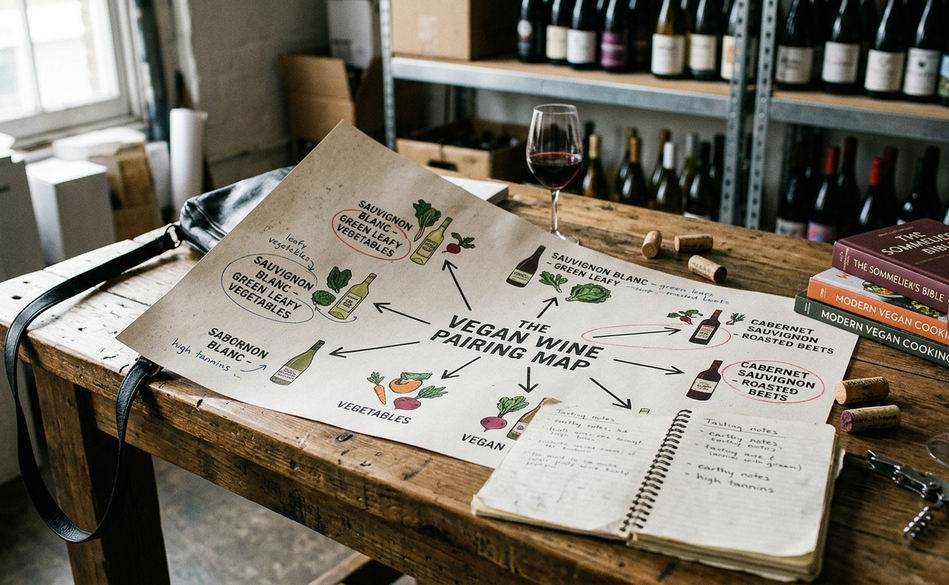
For asparagus blanched 2-4 minutes or briefly grilled over high heat, pour Sauvignon Blanc, Grüner Veltliner, or Vermentino at 7-9°C. Those wines keep the finish clean and mirror the fresh snap of the vegetable.
Sauvignon Blanc can be excellent with asparagus but too sharp with coconut-based green curry, where off-dry Riesling or Gewürztraminer handles both herbs and heat better.
What to avoid with raw greens
Raw greens, shaved fennel, cucumber, and herb salads have little fat to absorb oak sweetness. Whites with obvious new-oak flavor can taste clumsy beside chlorophyll, especially when the dressing is lean.
Pro Tip: Choose unoaked or lightly lees-aged whites for raw salads. Lees texture can soften the wine without adding the vanilla tone that clashes with green bitterness.
Aged Chardonnay complements nutritional yeast and cashew cream, but the same wine may taste broad and dull with raw cucumber, fennel, or leafy salads.
Balancing Spice and Heat in Vegan Cuisine
Spicy vegan dishes are assessed by heat level, sweetness, and sauce weight. Chili heat needs a wine that cools rather than amplifies it.
Use sweetness as a tool
For chili-heavy curries, Sichuan-style tofu, or harissa vegetables, look for wines labeled off-dry, feinherb, or halbtrocken. When technical information is available, bottles carrying roughly 12-35 g/L residual sugar can soften chili heat while still keeping the dish lively.
Riesling and Gewürztraminer are the most dependable choices in this lane because they bring aroma as well as relief. Ginger, lemongrass, coriander, cardamom, and dried chili all have enough perfume to meet these wines halfway.
Alcohol makes heat louder
Keep alcohol below 13% ABV for spicy dishes when possible and serve aromatic whites at 6-8°C. Wines above 14% ABV often make chili burn feel sharper, particularly when the sauce is lean rather than creamy.
During practice, the fastest correction for a fiery mismatch is simple: reduce alcohol and tannin, then increase acidity or gentle sweetness.
Navigating Rich Plant-Based Fats and Creams
Cashew cream, avocado, tahini, and coconut milk coat the mouth differently from butter or cream, but the pairing principle still holds: match texture first, then use acidity or bubbles to reset the palate.
Cashew cream, avocado, and tahini
Cashew cream sauces made from roughly 75-100 g soaked cashews per 250 ml of finished sauce pair well with high-acid Chardonnay styles such as Chablis served at 9-11°C. The acidity cuts through the coating texture while the wine’s body keeps the match from feeling thin.
Avocado wants freshness. Tahini wants cut. Coconut milk wants both cut and aromatic lift, especially when the dish carries ginger, chili, or lime.
When bubbles do the best work
Traditional method sparkling wines, typically served at 6-8°C, are especially effective with fried cauliflower, avocado tacos, coconut curry, or tahini-dressed vegetables because carbonation scrubs fat from the palate.
For readers who enjoy the technical side of wine structure, the American Society for Enology and Viticulture is a useful reference point for broader enology context.
The Final Verdict on Vegan Wine Pairing
The most reliable ranking for plant-based pairing is acidity first, body second, aromatics third, and tannin last. Vegetables rarely bring the same level of fat and protein that tannic wines expect, so acidity becomes the bridge.
A quick table test
- Take one bite of the dish.
- Wait 10-15 seconds, then take one sip of wine.
- Pause for about half a minute.
- Take a second bite and notice whether bitterness, heat, or dryness grows.
If bitterness or heat increases on the second bite, reduce tannin or alcohol and increase acidity. When technical sheets are available, crisp whites and rosés with pH around 3.0-3.4 are usually more reliable for vegetable-led dishes than broad, low-acid wines.
Choose the high-acid bottle first: Sauvignon Blanc for green vegetables, Chablis for cashew cream, traditional-method sparkling for fried or fatty dishes, dry rosé for delicate earthy plates, and off-dry Riesling when chili heat enters the room.