Welcome to our cellar of knowledge. Whether you are uncorking a rare vintage or seeking the perfect pairing for a weeknight dinner, our guides are crafted to elevate your wine journey and deepen your appreciation for the vine.
The Science Behind High-Low Flavor Dynamics
The pairing logic starts by separating snack impact into three practical loads: salt, fat, and sugar. Salt acts as a flavor amplifier—it makes the fruit and acidity in a glass seem much more vivid.
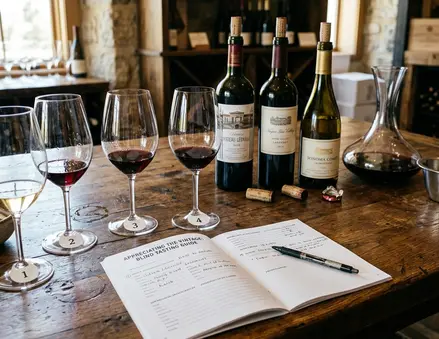
When evaluating these combinations during club tastings, use a small snack portion of roughly 15 to 25 grams. Follow this with a 30 to 45 milliliter sip of wine so the food does not dominate the trial. A useful comparison sequence is to eat the snack first, wait about 10 to 15 seconds while chewing, and then take the wine. Take a second sip 25 to 40 seconds later to judge whether the palate has reset.
Sparkling wines show the clearest cleansing effect when served cold, generally between 5 and 8 degrees Celsius. Full-bodied whites for richer snacks are more expressive at 10 to 13 degrees Celsius. Effervescence physically lifts oil from the palate, while acidity increases salivation. You can see how astringency and fat interact to create a drying sensation that counters greasy or creamy textures.
1. Truffle Potato Chips and Blanc de Blancs
The truffle-chip match relies on a high-fat, high-salt base with an earthy top note. A 100 percent Chardonnay Champagne brings cutting acidity, fine bubbles, and lees-derived brioche notes that elevate the earthy truffle. The yeast contact during Champagne production leaves behind a toasted bread aroma that naturally complements the savory depth of the seasoning.
Choose thin potato chips with visible seasoning and a clean fry aroma. Stale oil or rancid notes will flatten the Champagne before the truffle character even appears. A Brut Blanc de Blancs with a dosage in the 0 to 12 grams per liter range keeps the finish dry enough for salty chips. It leaves just enough texture for the earthy seasoning.
Serve the wine at 6 to 8 degrees Celsius. Taste within 10 to 20 minutes of pouring while the mousse is still active. The strongest match appears when the chip is eaten first and the Champagne follows after 8 to 12 seconds, just as the oil begins coating the tongue.
Pro Tip: Always check the fry aroma of the chips before pouring the Champagne. Clean potato scent is mandatory for this pairing to succeed.
2. Spicy Nacho Tortilla Chips and Off-Dry Riesling
Spicy nacho chips bring chile heat, powdered cheese, salt, and a slightly sweet manufactured corn flavor. A dry red wine would intensify the bitterness and alcohol burn. A better solution is an off-dry German Riesling in the Kabinett to Spätlese style range.
Look for bottles showing perceptible residual sugar around 18 to 45 grams per liter rather than a fully dry finish. Serve the Riesling at 7 to 9 degrees Celsius. Warmer pours make the sugar feel heavier against the cheese powder.
After eating a heavily seasoned chip, wait 20 to 30 seconds before judging the wine. Capsaicin binds to the receptors on your tongue, creating a false sensation of heat that peaks after the first bite rather than immediately. High acidity is essential here. The best examples taste lime-like or green-apple sharp after the initial sweet impression.
3. Buttered Movie Popcorn and Oaked Chardonnay
This pairing mirrors texture instead of fighting it. Movie-style popcorn carries a distinct butter aroma, salt, and a warm corn sweetness. Oaked Chardonnay that has gone through malolactic fermentation creates a smooth, creamy tasting experience.
The strongest wine candidates show malolactic markers such as butter, cream, or baked apple. They also carry oak notes like vanilla, toast, or baking spice. Use popcorn that has been buttered or butter-flavored within 3 to 7 minutes. After that window, steam and fat can make the texture leathery rather than crisp.
Serve fuller oaked Chardonnay at 10 to 12 degrees Celsius. Colder temperatures mute the buttered-popcorn echo. Warmer service can make the oak and alcohol feel broad. A practical tasting ratio is one small handful of popcorn followed by a 35 to 50 milliliter sip. Too much salt can make the wine seem sweeter than intended.
4. Dark Chocolate Peanut Butter Cups and Ruby Port
The peanut butter cup pairing builds entirely around density. Peanut butter sticks to the palate, while dark chocolate adds bitterness. The candy's sweetness can make ordinary dry wines taste thin or sour.
A youthful, fruit-forward Ruby Port cuts through this density. Dark chocolate in the 60 to 72 cacao range gives enough bitterness to keep the Ruby Port from tasting merely sweet. A 45 to 60 milliliter pour is sufficient because the wine is fortified and concentrated. Larger pours can overwhelm the snack after two or three bites.
Serve the Ruby Port slightly cool, around 14 to 16 degrees Celsius. This keeps the berry fruit bright and the alcohol warmth controlled. Let the chocolate soften in your mouth for 5 to 8 seconds before sipping. The Port can then bind with the cocoa and peanut fat rather than sitting on top of them. This interaction creates a classic peanut butter and jelly flavor profile on the palate, transforming two distinct items into a unified dessert.
5. Crispy Fried Chicken Tenders and Lambrusco
During practice, we found the crust is the main challenge. Breaded fried chicken brings salt, browned flour, rendered fat, and a crunchy surface. It needs a wine with both refreshing acidity and dark fruit flavors.
Dry Lambrusco, a sparkling red from Emilia-Romagna, serves as the ideal counterpoint. Choose a bottle labeled secco or dry rather than sweet. A modestly dry finish keeps the savory breading in focus. The frothy bubbles physically scrub the palate clean of frying oil, preparing your mouth for the next bite.
The best window for this pairing is 4 to 12 minutes after frying or reheating. The crust is still crisp, but the surface oil has settled. Serve the Lambrusco at 8 to 10 degrees Celsius in a white-wine glass or small tumbler. Colder service can hide the dark cherry and plum notes. The pairing is strongest with plain or peppered tenders. Sugary barbecue-style glaze pushes the wine toward a candied profile.
6. Sour Cream and Onion Snacks with Sauvignon Blanc
This match links aroma families. Sour cream and onion snacks combine lactic tang, onion powder, garlic-like allium notes, and salt. A zesty, herbaceous Sauvignon Blanc harmonizes with the onion while its acidity balances the sour cream.
Marlborough-style Sauvignon Blanc tends to emphasize passion fruit, lime, and cut grass. Sancerre-style examples tend to feel leaner, chalkier, and more citrus-driven. Serve either style at 7 to 9 degrees Celsius so the acidity remains sharp enough to balance the creamy tang of the seasoning.
Use a 20 to 30 gram snack portion for the first test. Onion powder can accumulate quickly and make the second glass seem less aromatic. The best result comes after 12 to 18 seconds. The initial onion sharpness fades, and the wine's green notes align perfectly with the seasoning.
7. Classic Salty French Fries and Traditional Cava
Hot fries are mostly salt, potato starch, and frying oil.
The wine does not need aromatic complexity. It needs dryness, bubbles, and a guaranteed crisp finish. A bone-dry, certified traditional method Spanish Cava fits perfectly.
Pair the food and wine within 2 to 6 minutes of salting the fries. After that, the exterior loses crispness and the salt begins drawing moisture to the surface. Brut Nature or Brut Cava is the cleanest fit. Brut Nature sits at 0 to 3 grams per liter dosage, and Brut commonly reaches up to 12 grams per liter.
Serve the Cava at 5 to 7 degrees Celsius to emphasize the snap, the bubbles, and the contrast with the soft potato interior. Traditional-method production gives the wine a finer bead and more lees texture than a simple tank-fermented sparkler. This subtle creaminess helps bridge the gap with fries that have a soft, fluffy interior.
8. Limitations and Failure Tests
Not every casual snack works with fine wine. The boundary is set by identifying pairings where the snack changes the wine in a negative direction rather than revealing a new flavor. Highly tannic reds clash violently with spicy, sweet, or powdered snacks.
Young Cabernet-style reds with firm tannin are most likely to taste metallic or bitter beside chile-dusted chips, sweet candy coatings, or cheese powders. Salt-and-vinegar chips are equally risky. The acetic snap hits before the wine's fruit can register, especially with delicate whites and lighter reds. Highly sweet snacks need wines with equal or greater perceived sweetness. Otherwise, the wine often seems sour, thin, or stripped of fruit.
Run a quick failure test with one chip and a 30 to 45 milliliter pour before serving a full flight to your guests. The negative interaction is usually clear within 20 to 35 seconds.
Warning: Salt-and-vinegar chips with a delicate white wine will strip the wine of its fruit, leaving only harsh acid and alcohol on the palate.
Key Takeaway: These pairings assume fresh snacks and sound bottles; stale frying oil, flat sparkling wine, or heat-damaged bottles will distort the result more than the pairing theory itself.