Shifting Terroirs: How Climate Change is Redrawing the Global Wine Map
Climate change reaches the wine glass through a chain of small biological events. A warm March wakes the buds early. A cold night in April damages tender shoots. Summer heat pushes sugar forward while flavors lag behind. By harvest, a familiar vineyard may produce a wine with different acidity, alcohol, and tasting notes than growers once expected from the site.
The global wine map is moving as a result. Historic appellations are revising vineyard practices, while growers at higher latitudes are planting grapes in places once considered too cold for reliable commercial viticulture. To understand that shift, start with the physical foundations of terroir.
Defining Terroir in a Warming World
Terroir is the convergence of soil, topography, and climate that gives wine its sense of place. Soil controls drainage, nutrient availability, and rooting depth. Topography shapes sun exposure, elevation, and the movement of cold air. Climate determines whether a grape can complete its annual growth cycle.
Of those three pillars, climate historically provided the steadiest frame. Soil profiles remain broadly consistent across human lifetimes, and slopes do not change direction from one vintage to the next. Temperature, rainfall, and weather timing have become far more volatile.
Heat establishes the physiological limits of a wine region. A commonly used heat-summation system totals growing degree days from 1 April through 31 October in the Northern Hemisphere. Each day's mean temperature above a 10°C vine-growth baseline contributes to the seasonal total.
Heat Sets the Range
Cool-climate varieties such as Pinot Noir and Riesling can mature in lower heat-summation bands. Cabernet Sauvignon generally needs a longer, warmer season to bring its seeds, skins, and sugars toward maturity.
This helps explain why a temperature shift can change the suitability of an entire zone. It can also produce very different outcomes inside one appellation. A high, north-facing, free-draining slope may preserve acidity while a sheltered parcel with shallow soil accumulates heat and reaches water stress earlier.
How Rising Temperatures Accelerate Vine Phenology
Vine phenology is the sequence of growth stages from bud break to harvest. Each stage responds to accumulated warmth, so the calendar moves when spring arrives early or summer heat builds quickly.
Bud break: Sustained spring warmth activates dormant buds. Growth commonly begins when daily conditions remain near or above the vine's approximate 10°C threshold.
Shoot growth and flowering: Shoots extend and flowers develop, with flowering usually following bud break by 6–10 weeks depending on the grape variety and spring weather.
Fruit set: Fertilized flowers form young berries, establishing the structure of the crop.
Veraison: Berries soften and change color. This stage generally occurs 30–70 days before harvest.
Ripening and harvest: Sugar rises, malic acid declines, and skins and seeds continue developing toward phenolic ripeness.
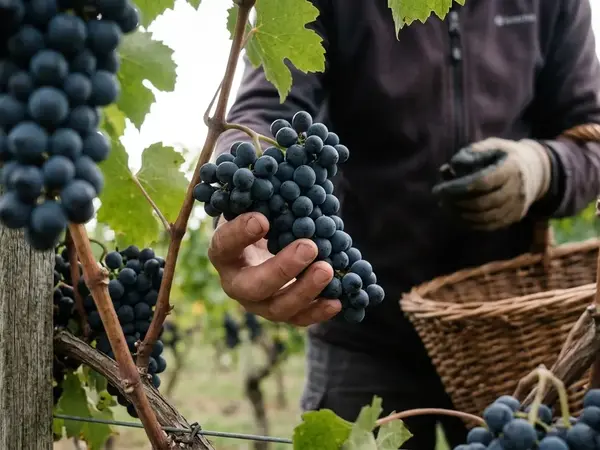
Vine growth stages responding to seasonal heat and weather extremes.
More growing degree days shorten the time between these stages. Sugar can accumulate rapidly, especially during hot spells, while warm nights accelerate the respiration of malic acid. The result is a difficult harvest decision: pick early to retain freshness, or wait for fuller flavor development as sugar continues climbing.
A must reading near 22–24°Brix can translate roughly to a dry wine with 13–14.5% alcohol by volume, although yeast performance and residual sugar affect the final level. That range gives the cellar practical consequences to manage. Grapes may arrive with enough sugar for substantial alcohol before tannins, seeds, and skins have reached the flavor profile associated with the site.
In the glass, this can mean broader texture, softer acidity, and riper fruit character. Food pairings built around the brisk structure of a traditional cool-climate vintage may need reconsideration as that balance changes.
The Impact of Erratic Weather on Traditional Vintages
Average warming tells only part of the vintage story. Timing often matters more. Unseasonal frost, hail during active growth, rain or wind at flowering, and prolonged drought can undo the apparent advantage of a warmer season.
Earlier Growth, Exposed Tissue
A mild late winter can bring bud break forward. Newly emerged shoots contain water-rich tissue and have little protection from freezing temperatures. Dormant vine tissue may tolerate temperatures below -15°C, yet young shoots and inflorescences can suffer injury when vineyard-level air falls to roughly -1°C to -2°C for 30–90 minutes.
Warmth Can Invite Frost
An early bud break followed by a single frost near -1°C can destroy exposed shoots before the season's extra heat becomes useful.
Flowering presents another narrow point of vulnerability. Cold, rain, or strong wind during the 7–14-day flowering window can disrupt fruit set, leaving small seedless berries and bunches that mature unevenly. Severe hail adds direct physical damage to the canopy and developing crop.
When Drought Stops Ripening
Moderate water limitation can restrain vine growth, but severe deficit changes the physiology. The vine closes its stomata to conserve water, restricting photosynthesis in the process. If this continues through veraison, berries may stop expanding even as exposed fruit faces greater risk of shriveling and sunburn.
This is the central paradox of warmer viticulture: more heat does not automatically produce riper or better fruit. A vine without enough available water cannot use that heat to continue normal development.
Adaptation Strategies in Historic Appellations
Growers are responding at the scale they can control: the individual vine and parcel. The useful question is specific. Is fruit ripening too quickly because clusters overheat, because bud break starts too early, or because roots cannot access enough water?
Protect the Fruit Zone
In a cool or damp vineyard, growers have often opened the canopy to improve airflow and expose clusters. Hotter conditions can reverse that logic. Retaining lateral shoots or positioning leaves to shade grapes from afternoon sun reduces direct cluster exposure.
The adjustment requires restraint. A dense canopy can complicate airflow and fruit-zone conditions, while an exposed canopy can leave berries vulnerable during a heat event. Good canopy management follows the sun's path across the actual row rather than a routine copied from another site.
Delay the Seasonal Clock
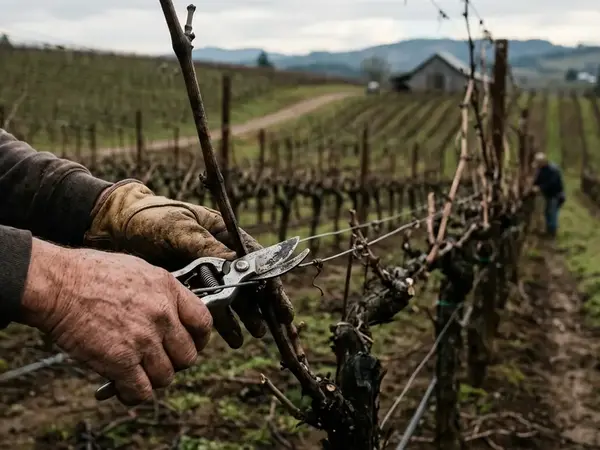
Late winter pruning can postpone bud break by several days to roughly two weeks. Apical buds begin growing before basal buds, so pruning after the upper buds start moving redirects development toward the retained basal positions. In frost-prone parcels, that delay can keep vulnerable tissue dormant through part of the risk period.
Growers can also alter vine training systems to change canopy position, shade, and ripening pace. Rootstock selection addresses a slower, below-ground problem. Drought response depends on rooting depth, soil texture, crop load, and when the water deficit occurs, which is why rootstock trials need multiple seasons. Observations from at least three vintages provide more useful guidance than one hot year.
Broaden the Variety Mix
Some appellations are testing grapes better suited to warmer or drier conditions. In 2021, Bordeaux rules began admitting six climate-adaptation varieties on an experimental basis: the red grapes Arinarnoa, Castets, Marselan, and Touriga Nacional, plus the white grapes Alvarinho and Liliorila.
That change is significant because appellation rules help define regional identity. It also shows how adaptation can preserve viticulture by allowing the plant material to evolve within a controlled framework. Wider questions about regional conservation are examined in research on climate change and viticulture conservation.
Read the Parcel
Macro-climate projections identify broad warming pressure; slope aspect, elevation, nighttime cold-air drainage, rooting depth, and soil water retention decide whether a particular response works within an individual vineyard.
This vineyard-scale variation deserves emphasis. Two neighboring blocks can require different pruning dates, canopy density, or rootstock choices because their soils store water differently and their slopes receive different amounts of afternoon heat.
Exploring the New Frontiers of High-Latitude Viticulture
As established regions manage excess heat, viable viticulture is extending farther north and south of the equator. Latitude offers a useful starting point, though growers also evaluate frost-free season length, summer heat accumulation, daylight, rainfall, and harvest conditions.
Commercial vineyards now operate in southern England near 50–52°N, Denmark near 55–56°N, and southern Sweden near 55–59°N. In the Southern Hemisphere, expansion includes Tasmania near 41–43°S and vineyards in southern New Zealand near 45°S.
Sparkling Wine Opens the Door
Traditional-method sparkling wine often provides a practical entry into these cooler regions. Grapes for sparkling base wine are commonly picked around 17–20°Brix, earlier than many still-wine grapes. That timing retains the acidity needed for secondary fermentation and extended lees aging.
A season that remains marginal for fully ripened Cabernet Sauvignon may therefore support Chardonnay or Pinot Noir intended for sparkling production. The target style changes the definition of a successful harvest.
Old Geology, Newly Usable Heat
Some emerging regions also contain soils that recall established wine regions. Southern England has extensive Cretaceous chalk formations, including free-draining alkaline sites comparable in broad geological age and drainage behavior to chalk-bearing areas of northern France. Their composition is not identical, yet the physical parallels are meaningful for rooting and water movement.
Warmer growing seasons are unlocking those soils for commercial wine production. The resulting wines will still express local rainfall, daylight, exposure, and farming choices, giving winery guides and wine education a new set of regional identities to explain.
The Future of the Glass: A Shifting Harvest
The global wine map is undergoing a permanent transformation. Historic regions are adjusting canopies, pruning schedules, rootstocks, training systems, and permitted varieties. Cooler territories are finding that their growing seasons can now support commercially viable vineyards, especially for traditional-method sparkling wine.
Wine remains an agricultural product first—atmospheric conditions set bud-break timing, flowering success, water availability, disease pressure, ripening speed, and the temperature of grapes entering the winery. A harvest moving from late September into the first half of September changes labor schedules, fermentation-room cooling demand, grape temperature at intake, and the interval between veraison and picking.
Burgundy's documentary harvest records extend back to 1370, offering more than six centuries of vintage timing for comparison. Across historic French wine regions, grape harvest has advanced by roughly 10–14 days over the past century, placing the climate shift directly in the glass.