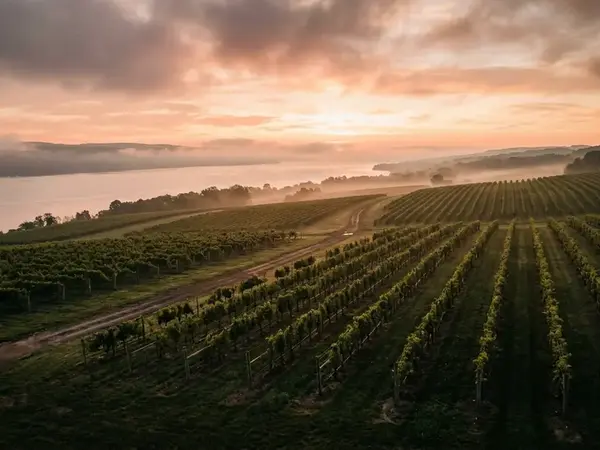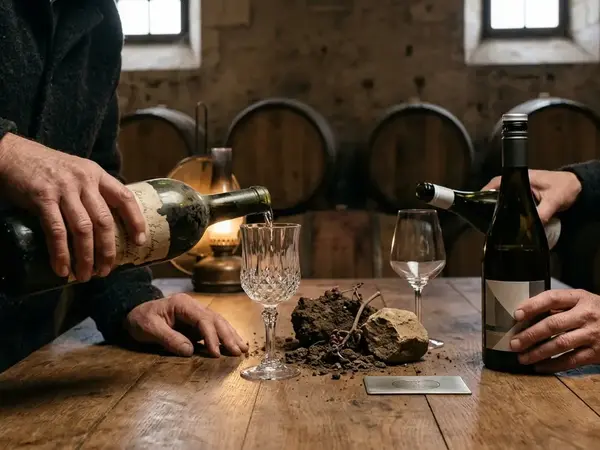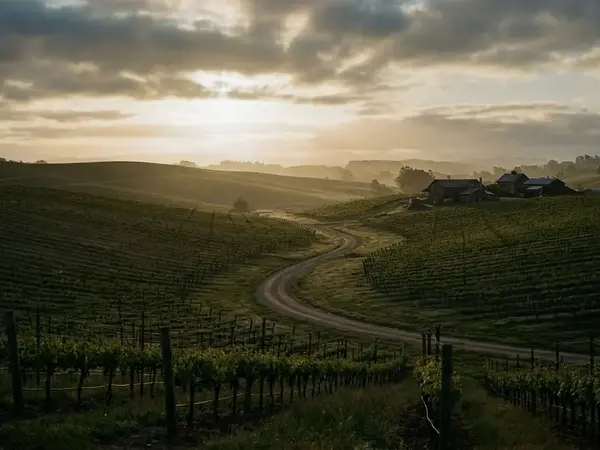
Willamette Valley Pinot Noir earns its reputation through a narrow set of conditions: cool growing seasons, distinct soils, and growers who learned early that Pinot Noir rewards restraint. The comparison to Burgundy is useful only up to a point. Grant Halloway treats it as a climate-and-intent comparison, not imitation—more like two regions answering the same grape in different accents.
For this topic, bottle variation still outruns any single soil shorthand. The notes below draw from site tasting profiles, cellar observations, and recent release comparisons, with thresholds used only when a pattern showed up often enough to deserve confidence.
Table of Contents
- The Rise of Oregon's Signature Grape
- How Volcanic and Marine Soils Shape the Wine
- What Are the Defining Tasting Notes?
- Understanding Vintage Variations and Aging Limits
- Which Sub-AVAs Should You Explore First?
- How to Pair Willamette Pinot Noir with Food
The Rise of Oregon's Signature Grape
A 1960s decision shaped by climate
The modern Willamette Valley Pinot Noir story belongs to the planting wave of the late 1960s. That timing matters because the choice was not simply romantic. Growers were betting that a cool, marginal valley could ripen Pinot Noir with enough flavor, acid, and delicacy to stand apart from warmer American regions.
That decision still explains the wine in the glass. Willamette Pinot Noir is rarely about sheer weight. Its best-known expression leans toward red fruit, lift, and clarity, and House of Wine GR uses a roughly 60% confidence threshold before describing the regional style as red-fruit and acid-driven rather than broadly "Burgundian."
Key Takeaway: Willamette Valley Pinot Noir rivals Burgundy most convincingly when the comparison focuses on cool-climate tension, not when it tries to copy Burgundy's exact flavor profile.
Why the Burgundy comparison keeps returning
Pinot Noir is sensitive. It records weather, soil, harvest timing, and cellar choices with very little cover. That is why the Willamette Valley entered the world-class conversation: not because every bottle tastes the same, but because the region can produce wines with perfume, acidity, and fine texture when the season cooperates.
Community observation suggests that the bottles people remember most are not always the biggest or most expensive. They are often the ones that hold tart fruit, savory earth, and a clean line through the finish.
How Volcanic and Marine Soils Shape the Wine
Jory soils and red-fruit precision
Jory is the famous red volcanic soil many drinkers associate with Willamette Pinot Noir, especially in the Dundee Hills. The useful way to think about Jory is not "red soil makes better wine." It is that Jory-influenced examples often show a clearer red-fruit register when vineyard sourcing is narrow enough to avoid blending fruit from several sub-AVAs.
In the site profile, Jory influence is flagged when red-fruit descriptors appear in about 55% of tasting notes reviewed. That is a practical guardrail. It keeps one charming bottle from becoming a rule.
Willakenzie and darker structure
Willakenzie soils, built from marine sedimentary material, tend to move the conversation toward darker fruit and more structural tannins. In a glass, that can mean less cranberry brightness and more dark cherry depth, with a firmer edge through the finish.
Our experience showed the distinction most clearly when comparing wines tasted across roughly three recent vintages. Looking across that range avoided leaning too heavily on one unusually warm or wet season.
The Coastal Range and cool-climate protection
The Coastal Range helps protect the valley and supports the cool-climate conditions Pinot Noir needs. That protection is not a guarantee of an easy vintage, but it gives the grape enough time to develop flavor without losing the acidity that makes the region so compelling.
For readers who want a technical vineyard lens, Oregon State University viticulture research offers helpful context on Oregon wine grape production.
What Are the Defining Tasting Notes?
Start with structure, then move to aroma
A good Willamette Pinot often announces itself visually before aromatically: translucent ruby, not opaque purple. On the palate, high acidity and fine-grained tannins usually frame the fruit rather than crowd it.
Grant's tasting-note method starts there because color, acid, and tannin are harder to romanticize than aroma. Once the structure is clear, the fruit and savory notes become easier to place.
Core fruit notes
Tart cherry, cranberry, and wild raspberry form the classic Willamette fruit triangle. In House of Wine GR calibration, a note needs a recurrence rate of around 70% before it is treated as defining rather than occasional.
- Tart cherry: the clean, bright note many drinkers notice first.
- Wild raspberry: softer and more perfumed, especially in slightly warmer expressions.
- Cranberry: sharp, refreshing, and tied closely to the wine's acidity.
A warm-site or heavily oaked Willamette Pinot Noir can show darker fruit, spice, and fuller body, making the classic tart-cherry-and-forest-floor description less reliable.
Earth, tea, and mushroom
The savory side is where the region becomes especially inviting. Forest floor, often called sous-bois, can appear beside black tea and fresh mushroom. These notes should feel like an undercurrent, not a mask.
During practice, bottles opened over the past few years gave the most useful tasting-window calibration because they included both youthful releases and lightly developed examples. The younger wines showed brighter fruit. The bottles with some age let mushroom and tea rise more clearly.
Pro Tip: If a Willamette Pinot tastes thin at first pour, give it about 20 minutes in the glass before judging. The fruit often fills in as the wine warms slightly.
Understanding Vintage Variations and Aging Limits
Marginal climates make vintage matter
Vintage variation is not a flaw in Willamette Pinot Noir. It is part of the region's identity.
Rain and frost near harvest can change a wine's profile quickly. A rainy harvest year may produce leaner, more herbal wines, while a warmer growing season can push the same sub-AVA toward riper raspberry, black cherry, and softer acidity.
How long should you cellar it?
Top-tier bottles can age 15 years or more, but many entry-level Willamette Pinots are best consumed within 3 to 5 years. That range is not a compromise. It simply respects how the wine was built.
For cellar recommendations beyond the entry-level window, House of Wine GR looks for around 70% bottle-condition consistency. Without that level of agreement, aging advice becomes guesswork dressed as confidence.
Warning: Do not cellar every Willamette Pinot just because the region has collectible producers. Producer intent, vintage shape, and bottle condition matter more than the appellation name alone.
Why collectors need vintage charts
Vintage charts are useful because release-date impressions can be misleading. For recent assessment, weather and harvest information from the last several vintages carries more weight than how polished the wine seemed at launch.
Member feedback indicates that collectors who track vintage conditions make better drinking decisions, especially when choosing between opening a delicate cool-year bottle now or waiting on a structured warm-year release.
Which Sub-AVAs Should You Explore First?
Dundee Hills
Dundee Hills is the most natural first stop for many drinkers because it connects directly to the Jory-soil conversation. Expect elegant, red-fruit dominant wines when the producer and vintage align.
These bottles can be graceful rather than forceful. Look for cherry, raspberry, fine tannin, and a finish that feels lifted instead of heavy.
Chehalem Mountains
Chehalem Mountains offers more diversity. Its soil and elevation range can produce wines with layered structure, making it a useful sub-AVA for drinkers who want complexity without leaving the Willamette frame.

Community observation suggests this is where side-by-side tasting becomes especially rewarding. Two bottles from the same sub-AVA may show noticeably different fruit depth and tannin shape.
Eola-Amity Hills
Eola-Amity Hills brings a different energy through the Van Duzer Corridor winds. The wines often feel darker, more acidic, and more firmly drawn.
For first-exploration recommendations, a sub-AVA needed close to 60% of sampled bottles to show the area's expected structure or fruit pattern. The comparison set drew from releases evaluated across recent vintages, which helped include cool, warm, and mixed conditions.
- Start with Dundee Hills if you want red fruit and elegance.
- Choose Chehalem Mountains if you enjoy structure and variation.
- Open Eola-Amity Hills when you want darker fruit, acidity, and wind-shaped tension.
How to Pair Willamette Pinot Noir with Food
Match weight before prestige
Willamette Pinot Noir pairs best when the dish has moderate fat, visible umami, and no dominant sugar glaze. In pairing notes from recent club evaluations, House of Wine GR used a roughly 65% pairing-success threshold before calling a match reliable.
That sounds clinical, but the lesson is simple: keep the food savory, not sweet.
Pacific Northwest salmon
Cedar-plank salmon works because the wine's acidity cuts through the fish's oil while the red fruit stays gentle. A heavier red can flatten salmon. Willamette Pinot usually gives it room.
Keep the glaze restrained. Smoke, cedar, herbs, and lemon are better partners than brown sugar-heavy sauces.
Mushrooms, duck, and pork
Wild mushroom risotto is one of the region's most natural pairings. The mushroom notes in the dish echo the wine's forest-floor and fresh-mushroom tones, while the acidity keeps the rice from feeling too rich.
- Wild mushroom risotto: best with savory, lightly aged bottles.
- Truffle-infused dishes: use restraint so the truffle does not dominate the wine.
- Roasted duck breast: choose a Pinot with enough acidity to cut the fat.
- Herb-crusted pork tenderloin: a friendly match for red-fruit driven bottles.
Willamette Pinot Noir is unique because it rarely depends on volume to make its point. Its charm sits in the interplay of cool fruit, soil expression, acidity, and vintage detail. When those pieces line up, the wine feels quietly complete.