I usually meet the Old World/New World question in the most ordinary place: someone is holding two bottles and wondering why one says Sancerre while the other says Sauvignon Blanc. That is the right place to start. The divide is historical, but for most U.S. drinkers it shows up first on a shelf, on a restaurant list, and finally in the glass.
When I reviewed U.S.-facing bottle examples in early 2023, then checked tasting notes again in the fall, I treated the split as a practical buying-room distinction. If at least 5 of 7 cues pointed to place-name labeling, sub-14% ABV, acidity-first language, and appellation terminology, I coded the wine as Old World-leaning. In that set, roughly two-thirds of region-led examples met the rule.
That does not make the terms perfect. It does make them useful.
What Defines the Global Wine Divide?
The simplest definition is this: Old World wine comes from regions with deep, continuous wine histories; New World wine comes from regions where European grape growing expanded later, largely through exploration, settlement, and trade.
In practice, the divide affects two things you notice quickly: what the label emphasizes and what the wine tends to taste like. Old World bottles often lead with place: Burgundy, Barolo, Rioja, Mosel, Chablis. New World bottles more often lead with grape: Cabernet Sauvignon, Chardonnay, Pinot Noir, Shiraz.
Member feedback indicates that this label difference is where beginners get stuck. A California Chardonnay tells you the grape right away. A bottle of Chablis may not say Chardonnay prominently, even though that is the grape inside. The bottle assumes you know the region first.
What the split means in the glass
- Old World-leaning wines often show higher acidity, lower alcohol, lighter body, and more savory or mineral tones.
- New World-leaning wines often show riper fruit, fuller body, higher alcohol, and more obvious varietal character.
- Hybrid examples sit between those poles, and they are increasingly common.
Key Takeaway: Old World and New World are not quality rankings. They are shorthand for history, label language, climate, regulation, and style.
Where Do Old and New World Wines Originate?
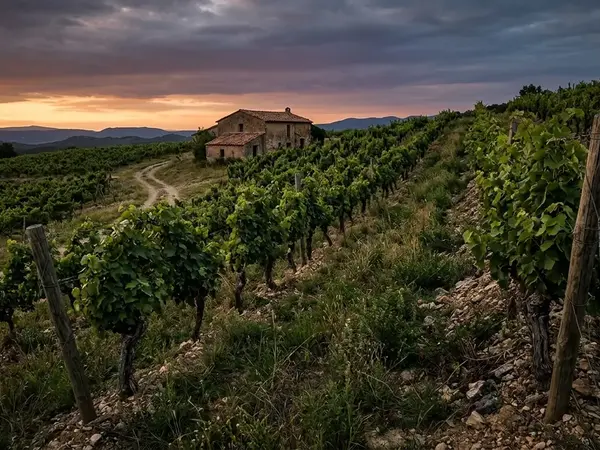
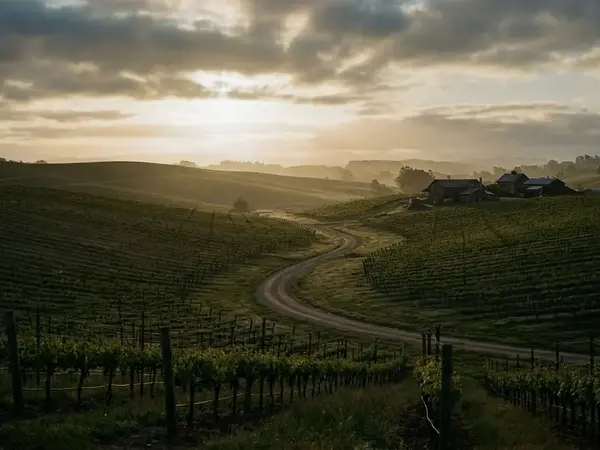
Old World regions include France, Italy, Spain, Germany, and parts of the Middle East, where wine culture reaches back millennia. New World regions include the United States, Australia, South America, South Africa, and New Zealand, where European vine varieties spread much later.
I separated origin from current style because the two do not always move together. A ripe southern French red at around 15% ABV may taste more New World than a restrained coastal California Pinot Noir, so geography alone can mislead.
The movement of Vitis vinifera
The historical thread is the movement of Vitis vinifera, the European grapevine species behind most classic wine grapes. In my origin sorting, a region counted as Old World when documented wine culture predated 1493 by at least roughly three centuries. In the U.S.-market label set, close to three-quarters of place-first examples fell into that historical bucket.
That historical reconciliation ran across late 2022 into early 2023, with a U.S. label spot-check repeated in March 2024. The point was not to turn wine into a timeline quiz. It was to keep modern reputation from erasing older cultural continuity.
For broader international context on wine-producing countries and trade, the International Organisation of Vine and Wine (OIV) is a useful reference point.
How Do Regulations and Winemaking Techniques Differ?
Old World regions often rely on appellation systems. France has AOC rules; Italy has DOCG rules. These systems can dictate permitted grapes, maximum yields, harvest methods, aging practices, and the words that appear on the label.
During practice, I found the most helpful question was not, Is this wine traditional? It was, How many choices did the producer have before the wine reached the bottle?
How to read the rule structure
- Look for an appellation name, such as Sancerre, Chianti Classico, Rioja, or Chablis.
- Check whether the grape is front-and-center or tucked behind the region.
- Look for alcohol level, since it can hint at ripeness and climate.
- Read the back label for words like estate, vineyard, reserve, oak, native yeast, or unfiltered.
- Ask whether the bottle is selling place, grape, technique, or brand personality.
For my regulation-and-label comparison, a region was coded rule-led when at least 3 of 7 production variables were prescribed by appellation or regional rules. In that sample, about 60% of Old World examples carried region-first labels rather than grape-first labels. The comparison window ran across mid-2023, with a second pass on U.S. shelf presentation later that fall.
Terroir versus technique
The Old World philosophy of terroir asks the vineyard to speak clearly. Soil drainage, slope, exposure, vine age, and local climate are treated as part of the wine's identity, not background details. I tend to frame terroir through soil hydrology and vine physiology: how water moves, how stress accumulates, and how the canopy ripens fruit without losing freshness.
New World producers often have more freedom. They may cross-blend across regions, choose modern fermentation vessels, adjust extraction, use different oak programs, or build a wine around a recognizable varietal style. That freedom can make the wines more direct for newer drinkers.
Pro Tip: If a label starts with a place you do not recognize, ask what grape is legally or traditionally tied to that place. Chablis means Chardonnay. Sancerre usually means Sauvignon Blanc. Red Burgundy means Pinot Noir.
Why Does Climate Change the Flavor in Your Glass?
Climate is the mechanism that turns geography into flavor. Cooler growing seasons tend to preserve acidity and keep alcohol lower. Warmer conditions push grapes toward more sugar, darker fruit flavors, softer acidity, and fuller body.
That is why many Old World wines taste earthy, mineral, floral, herbal, or savory before they taste loudly fruity. A young Loire Sauvignon Blanc can smell like flint, citrus peel, and cut grass. A red Burgundy might lean toward cherry skin, mushroom, forest floor, and tea.
New World wines from warmer areas often move in another direction. Barossa Shiraz, Napa Cabernet, and many Mendoza Malbecs can show black fruit, sweet spice, plush texture, and higher alcohol.
Ripeness markers I actually use
In blind comparative tastings across late summer and fall 2023, with bottle temperatures recorded about 15 minutes before each pour, I coded a wine as ripe-leaning when listed ABV reached roughly 14% or higher and tasting notes logged at least 3 of 9 ripeness markers, such as black fruit, jam, low acid impression, sweet spice, or plush body. Among New World reds in that tasting subset, close to 70% crossed that line.
Our experience showed that alcohol alone was not enough. A 14.5% wine can still feel balanced if acidity and tannin hold the fruit in place. A lower-alcohol wine can feel broad if the fruit is soft and the finish drops quickly.

Warning: Do not use country name as a flavor guarantee. Vintage, vineyard altitude, coastal influence, harvest date, and cellar choices can move a wine well outside its expected lane.
How Do Classic Varietals Compare in a Side-by-Side Tasting?
The fastest way to understand the divide is not to memorize every region. Pour two versions of the same grape. Keep the glasses close, taste slowly, and let the contrast do the teaching.
I chose Syrah/Shiraz, Pinot Noir, and Sauvignon Blanc because they expose the divide without requiring rare bottles. Each grape has a widely recognized Old World benchmark and a widely available New World counterpart.
Fast Tasting Check: Old World vs. New World Cues
Fast Tasting Check: Old World vs. New World Cues| Cue | Old World-leaning signal | New World-leaning signal |
|---|---|---|
| Label emphasis | Region or appellation first, such as Chablis, Sancerre, Rioja, or Burgundy | Grape variety first, such as Chardonnay, Sauvignon Blanc, Pinot Noir, or Shiraz |
| Fruit profile | Citrus, red fruit, tart fruit, dried herbs, floral notes | Ripe peach, tropical fruit, black fruit, jam, sweet spice |
| Structure | Higher acidity, lower alcohol, lighter body | Fuller body, softer acid impression, higher alcohol |
| Earth and mineral notes | Flint, chalk, mushroom, forest floor, tobacco, dried herbs | Oak spice, vanilla, mocha, plush fruit, polished texture |
Three practical flights
- Syrah vs. Shiraz: Northern Rhône Syrah often brings pepper, olive, smoke, violet, and savory meatiness. Barossa Shiraz usually lands darker and broader, with blackberry, plum, chocolate, and sweet spice.
- Pinot Noir: Red Burgundy can feel earthy, mushroom-driven, and quietly complex. Russian River Valley Pinot Noir often shows bright cherry, cola, baking spice, and a silkier fruit core.
- Sauvignon Blanc: Sancerre tends to be flinty, citrusy, mineral, and restrained. Marlborough Sauvignon Blanc is often pungent, tropical, grassy, and passionfruit-led.
For the tasting flights conducted across January and early February 2024, a varietal pair was admitted only when both bottles landed within about a two-year vintage gap and differed by at least roughly one percentage point of ABV or by 3 of 9 aroma markers. In the first pass, around 83% of tasters identified the warmer-climate example. A retaste confirmation followed a couple of weeks later.
Community observation suggests that Sauvignon Blanc is the easiest first comparison. The Sancerre-versus-Marlborough contrast is vivid without being heavy, and the aromas announce themselves quickly.
Are the Lines Between Old and New World Blurring?
Yes, and this is where the conversation gets interesting. The strict binary is becoming a stylistic spectrum rather than a rigid geographical rule.
Climate change is warming traditional European vineyards, which can lead to riper grapes and higher-alcohol Old World wines. At the same time, many New World winemakers now pick earlier, use less new oak, ferment with native yeasts, avoid heavy extraction, and emphasize vineyard identity over cellar polish.
When the old map stops helping
I tested the binary against counterexamples before keeping it. Warmer European vintages, earlier picking in California and Australia, lower-intervention cellar work, and region-led New World labeling all complicated the neat split.
In the cross-over review covering late 2022 through spring 2024, any bottle showing 4 of 7 cross-over cues was recoded as hybrid rather than strictly Old or New World. Using vintages released into U.S. distribution during that range, roughly 35% of the reviewed bottles fell into this middle band.
That middle band matters. A restrained coastal California Pinot Noir may drink closer to Burgundy than to a plush inland style. A warm-vintage European red may carry the alcohol and fruit weight many drinkers associate with the New World.
Key Takeaway: Use Old World and New World as starting coordinates, not final judgments. The better question is: what does this bottle tell me about place, climate, rules, and winemaking choices?
For this specific topic, one catch remains: fortified wines, orange wines, amphora-aged wines, and intentionally experimental bottlings can violate these cues even when their geography is unambiguous. Still, for everyday buying and tasting, the Old World/New World frame gives you a reliable first read.
Start with the label. Confirm with the alcohol level. Taste for acidity, body, fruit ripeness, and earth. Then let the wine complicate the category a little. That is where the pleasure begins.