Elevating Your Home Wine Experience
How do you transition from simply drinking wine to properly tasting and preserving it at home? Professional-level tasting does not require a cellar full of gadgets. A few well-engineered essentials bridge the gap between casual consumption and sommelier-level appreciation.
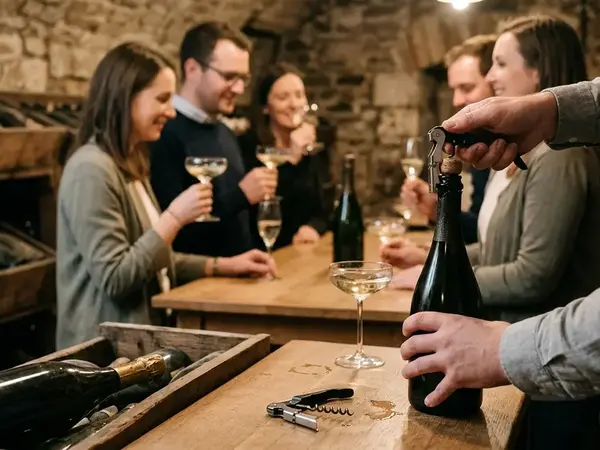
The core kit consists of one double-hinged corkscrew, universal glasses, one decanter sized for a 750 mL bottle, a preservation system, and an oversized polishing cloth. Following the bottle through a complete tasting workflow dictates these selections. You must open the bottle cleanly, present it in neutral glassware, manage oxygen or sediment, and protect any unfinished wine.
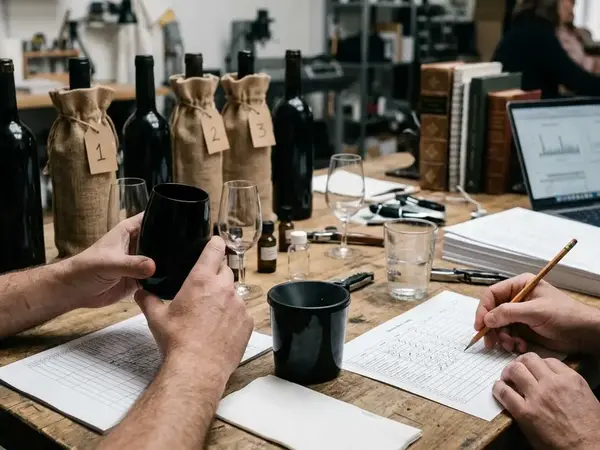
For a comparative tasting, provide two glasses per person and pour 60–75 mL of each wine. The smaller serving leaves enough bowl volume for swirling, allowing the aromas to gather before you take your first sip.
The Double-Hinged Corkscrew
The classic waiter's friend remains the proven standard in professional hospitality settings, easily outperforming bulky electric openers or winged corkscrews. The double-hinged design earns its place because extraction happens in two controlled lifts.
Cut the capsule below the bottle's raised lip with two short passes, then remove the top of the foil before inserting the worm. This keeps loose foil and capsule residue away from the pouring edge. Center the worm and turn until roughly five coils have entered the cork, stopping before the point emerges through the underside and sheds cork fragments into the wine.
A typical natural cork is extracted over about 8–15 seconds using the first hinge and then the second, rather than with one forceful pull.
Be Aware: A waiter’s corkscrew can crumble a severely degraded old cork even when used correctly; resistance, cracking, or a sinking center signals that a two-prong extractor or cork-retrieval method is safer.
Universal Crystal Glassware
A universal glass prioritizes repeatable aroma delivery over matching a separate shape to every grape. A bowl wider than the rim exposes wine to air during swirling, while the tapered top captures and concentrates those volatile compounds.
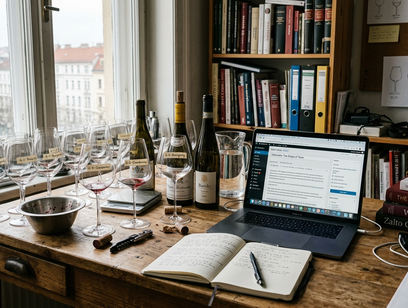
Varietal-specific stems can reveal subtle differences for advanced side-by-side study, but a well-proportioned universal glass supplies the most consistent baseline for routine home tastings. A practical universal glass holds 400–550 mL, yet receives only a 60–90 mL tasting pour so the wine can be swirled without reaching the widest part of the bowl.
Choose a smooth, cut or finely finished rim. Geometry and rim finish matter more to tasting performance than decorative crystal content. A thin rim delivers wine more smoothly to the palate. For visual assessment, hold the glass at roughly a 45-degree angle over a white, unpatterned surface to inspect clarity, core color, and variation at the rim.
A Wide-Based Decanter
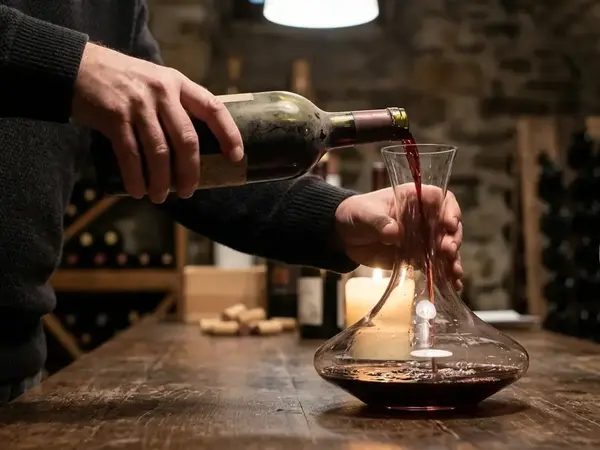
The decanting method is decided after checking the wine's age, aroma, and visible deposit. Decanting serves a dual purpose: separating older wines from accumulated sediment and introducing oxygen to tightly wound, youthful wines.
Stand a sediment-bearing bottle upright for 12–24 hours before opening so deposits collect at the base rather than remaining suspended along the side. For an older wine, pour slowly in one continuous movement and stop when dark sediment reaches the bottle's shoulder. Avoid splashing and serve promptly.
For a young, structured red, a decanter with a broad 20–25 cm base provides optimal wine-to-air contact.
Try This: A muscular young red may improve across the full 45-minute decant, while a mature, aromatic bottle can lose intensity during the same interval; smell and taste at 15-minute checkpoints rather than treating the timer as proof of readiness.
Reliable Preservation Systems
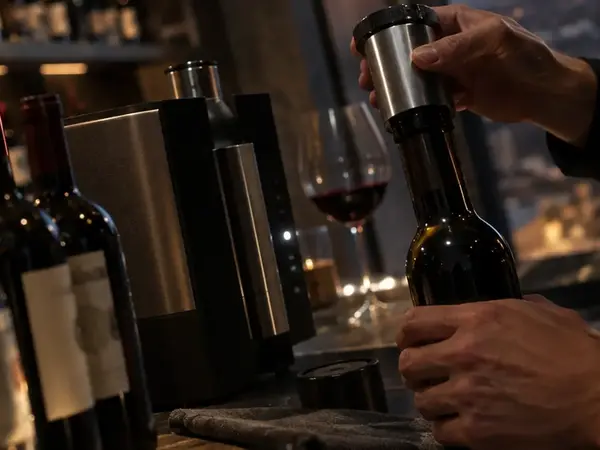
The preservation choice follows the intended reopening date. Apply preservation as soon as pouring ends. Leaving a half-full bottle exposed through a two-hour dinner gives oxidation a head start that later pumping or gas cannot reverse.
If the bottle will be revisited within the next few evenings, removing some headspace air with a hand vacuum is inexpensive and quick. Refrigerate a vacuum-sealed still wine immediately and plan to reassess it within 2–3 days. Bring reds out 20–30 minutes before serving.
For a bottle intended to remain open for 7–21 days, use a sealed argon system designed to displace or exclude headspace oxygen.
The Upshot: Vacuum closures are strictly for still wine; sparkling wine requires a pressure-rated stopper that locks beneath the bottle lip to maintain carbonation.
The Microfiber Polishing Cloth
Tasting glassware must be both visually clear and aromatically neutral. Standard kitchen towels often leave behind lint or residual detergent odors that interfere with the wine's bouquet. Fine microfiber lifts water spots and fingerprints safely.
Use a dedicated cloth roughly 50–70 cm long so both hands remain covered and bare fingers do not replace the marks being removed. Wash the cloth with fragrance-free detergent, omit fabric softener, and store it away from cooking towels. Softener and scented laundry products can leave aromas detectable in an empty glass.
Inspect the finished bowl against a white surface and a direct light source for water spots, lint, lipstick, and detergent film before pouring. Visual clarity is the first step in deductive tasting.
Putting It Together: Your First Structured Tasting
The tasting is sequenced from the less powerful bottle to the heavier red so tannin, alcohol, and oak do not overwhelm the first wine. Two glasses per guest keep both samples available for direct comparison.
- Twenty minutes before guests arrive, rinse or briefly steam two universal glasses per person, then polish each with the dedicated microfiber cloth. Avoid sudden temperature changes on cold crystal.
- Open both bottles 5–10 minutes before the first pour. Cut each capsule below the lip, wipe the neck, center the worm, and use both hinges to withdraw the cork without shaking the bottle.
- Pour the heavier, youthful red into the wide-based decanter and set a 45-minute timer. Meanwhile, serve 60–75 mL of the first wine into each person's first glass.
- At 45 minutes, pour the decanted wine into the second glasses and compare appearance, aroma, acidity, tannin, alcohol, body, flavor development, and finish while both samples remain available.
- When tasting ends, preserve leftovers immediately. Vacuum-seal bottles intended for the next 2–3 days or use sealed argon protection when the planned interval is 7–21 days, then refrigerate.