The High Stakes of Liquid Assets
Treating wine collection with the rigor of traditional financial planning separates solvent portfolios from expensive cellars. A credible acquisition plan models a five- to ten-year holding period. You must record the purchase invoice, bottle or case format, tax status, storage location, condition photographs, and intended resale channel on the exact purchase date. Treating wine as an alternative investment can successfully diversify a portfolio against traditional market inflation.
Improper storage, illiquidity, and hidden fees lead to severe financial loss—the investment test begins with the exit rather than the tasting note. Before buying, stress-test the position against a sale delayed by about eight to 16 weeks, five years of storage charges, two insured transfers, and the applicable auction or brokerage deductions. A highly rated bottle loses money when bought at a prestige-driven release price, stored privately without temperature records, and later offered as a single bottle into a thin auction category.
The Economics of the Fine Wine Market
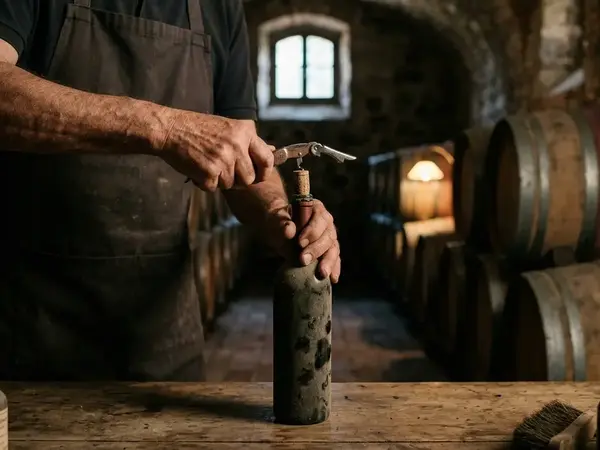
The fundamental supply and demand curve for vintage wine operates under strict physical constraints. Supply cannot be replenished after bottling. Opening one bottle permanently removes that unit from the global market, while breaking an original 12-bottle case often reduces the resale appeal of the remaining 11 bottles.
Scarcity is assessed at the producer-vintage-format level. A 750 ml bottle, a magnum, and an original six-bottle case are not interchangeable in the secondary market. Blue-chip wines function as Veblen goods, where demand often increases alongside price and perceived exclusivity. Demand evidence requires checking across at least three completed sale cycles within six to 12 months. Match the producer, vintage, bottle size, case condition, and tax status rather than relying on a single asking price.
Historical Performance and Auction Trends
Top-tier wines like First Growth Bordeaux and Grand Cru Burgundy have historically behaved distinctly during broader economic downturns. Major auction houses establish secondary market valuations and provenance standards. Historical resilience is judged from completed secondary-market transactions rather than headline index values alone.
Secondary market transaction history demonstrates: a defensible comparable set uses sales from the preceding six to 12 months. Match the vintage, format, quantity, fill level, label condition, original packaging, provenance, and bonded or duty-paid status. During stressed markets, valuation requires review over three to six consecutive sale cycles. One successful trophy lot can conceal repeated passes or withdrawn lots elsewhere in the same category.
The historical resilience associated with blue-chip French wine does not guarantee future returns; changing growing conditions can alter established terroirs, while emerging regions generally lack the multi-decade transaction history needed to distinguish durable collector demand from a short speculative surge.
The Hidden Costs of Wine Speculation
Mandatory expenses eat directly into potential profits. Break-even calculations must run from the buyer's cash outlay to the seller's net proceeds. Add the acquisition premium, applicable taxes, insured transport, annual professional storage, and condition photography.
At a modeled 25% buyer's premium, a £4,000 hammer price produces a £5,000 invoice before tax, shipping, storage, or insurance. The asset must later sell for more than £5,000 merely to begin recovering those additional costs. Obtain written storage quotes per 12-bottle case per year and transport quotes for both entry and exit. Many professional facilities maintain roughly 10-14°C with humidity commonly targeted around 65-75%.
Mitigating Provenance Gaps
Proven provenance documentation dictates asset value. A provenance file should retain the original invoice, warehouse intake record, every transfer document, insurance schedule, condition photographs, and release instruction for the full holding period. The same vintage commands materially different bids as an original bonded six-bottle case, a duty-paid case with continuous records, or loose bottles with several undocumented years, even though the wine and critic scores are identical.
Risk Factors and Market Volatility
Wine suffers from severe illiquidity. Finding a buyer at market value takes time. A routine brokered sale requires two to eight weeks from instruction to settlement. An auction consignment may take eight to 16 weeks after intake because authentication, cataloguing, photography, the sale date, buyer payment, and seller remittance occur sequentially.

The ongoing threat of counterfeiting necessitates expert authentication. Certified authentication reconciles label printing, capsule wear, cork branding where visible, bottle glass, fill level, importer marks, case markings, and ownership records. Conflicting details trigger specialist inspection before consignment.
Shifting consumer palates and generational trends can suddenly cool demand for historically popular styles. To detect weakening demand, track the number of bids, unsold lots, estimate revisions, and repeat appearances of the same wine across three to four sale cycles rather than watching only the highest reported result.
Practical Steps for Building a Wine Portfolio
Portfolio construction starts by separating futures purchases from mature stock. En primeur offers early access but introduces producer, merchant, delivery, and vintage-development risk. Mature wine carries provenance and storage risk. En primeur campaigns generally occur in the spring following harvest, with physical delivery commonly 18 to 30 months after purchase. Record the merchant obligation, expected bottling format, delivery window, and refund terms.
Bonded storage suspends applicable duty and consumption tax while the wine remains under bond. It does not erase those liabilities if the bottles are later withdrawn for domestic consumption.
Structuring the Initial Ledger
An optimal starter ledger covers 12 cases across at least three regions. Cap any single producer-vintage at two cases. Stagger expected drinking windows into three to seven, eight to 15, and 16-plus years. Review the ledger every six months for market activity, storage invoices, insurance values, critic reassessments, physical condition reports, and approaching drinking windows.
The Deflationary Reality of the Cellar
The final valuation separates increasing rarity from increasing price. Wine is meant to be consumed. Every time a bottle of a specific vintage is opened anywhere in the world, the global supply of that asset permanently shrinks. Consumption continuously reduces the pool of surviving bottles. Appreciation follows only when solvent collector demand persists.
At each six-month review, compare the likely net sale proceeds with the remaining storage, insurance, and transport costs through the intended exit date. If carrying costs overtake realistic appreciation, consumption or earlier sale becomes the rational decision. A sealed 12-bottle case becomes an 11-bottle remainder after one opening; even when each survivor is sound, the loss of original-case completeness changes the eligible buyer pool and sale format.