The Geological Reality of Ash and Pumice
The roots of vines grown in volcanic regions must work through compacted ash, pumice, weathered basalt, and old lava to find moisture. They follow fissures and softer seams rather than passing cleanly through intact rock. That harsh physical environment shapes how the vine survives and, indirectly, how the finished wine tastes.
Volcanic whites often evoke struck match, wet stone, smoke, or flint. These tasting notes are commonly gathered under the term minerality, useful sensory shorthand for aromas and textures that feel stony, saline, or austere. The word describes an impression in the glass; it does not identify a mineral compound carried intact from bedrock into a grape.
The more credible explanation follows an ash-to-glass chain. Porous soils shed water quickly. Dark volcanic material absorbs daytime heat. Limited moisture restrains berry swelling, while vineyard exposure affects ripening and acidity. Fermentation decisions and sulfur chemistry then influence whether the wine smells faintly smoky, sharply reductive, or cleanly flinty.
Where Lapilli Fit
Lapilli are pebble-sized volcanic particles measuring 2–64 millimeters across. Mixed with finer sandy ash, they create a coarse root environment with fast drainage and pockets of retained warmth. Their presence matters physically, although the sensory result still depends on vine water status and cellar handling.
Rock Has Limits
Minerals do not move directly from lava into grapes as ready-made smoke. Drainage, heat retention, restrained berry growth, fermentation, and reduction collectively produce the sensation drinkers call volcanic minerality.
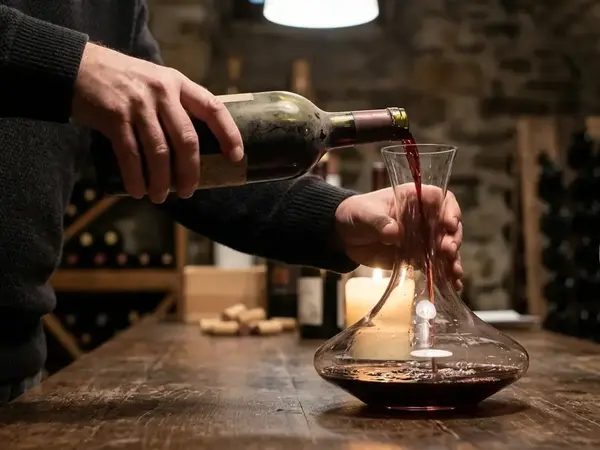
A freshly opened reductive white may release its strongest matchstick note during roughly the first 5–15 minutes. Oxygen can soften that aroma, revealing citrus, herbs, or wax beneath it. If the smell fades, it was likely part of the wine’s reductive development rather than a permanent fault.
Santorini: Salinity Inside the Basket Vines
Santorini’s vineyards make sense once the wind becomes part of the picture. Fierce Aegean exposure and intense reflected light would leave fruit vulnerable on an open trellis, so growers weave Assyrtiko canes into the kouloura, a low basket with the grape clusters sheltered inside.
A mature kouloura commonly forms a ring roughly 30–60 centimeters above the ground. Its close, coiled architecture reduces exposure while allowing old vines to occupy austere, ash-rich ground. The method belongs specifically to Santorini’s conditions; it should not be treated as a universal model for volcanic viticulture.
Sea Spray, Acidity, and Age
In the glass, dry Assyrtiko can feel almost architectural. Piercing acidity defines the center, followed by lemon, subtle smoke, and an intensely saline finish reminiscent of sea spray and crushed seashells. The wine remains lean even when its aromas broaden.
Serve a serious dry bottle at 9–11 degrees Celsius, then follow it for 20–30 minutes. The first pour may emphasize citrus and salt. With air, smoke and herbal details often become easier to separate from the wine’s bracing acid line.
That acidity also explains Assyrtiko’s cellar value. Well-balanced examples commonly develop for about 8–12 years, moving toward honeyed, nutty, and more integrated savory notes while retaining freshness. Mature bottles require gentle handling, since storage history increasingly determines how clearly that structure survives.
Give Assyrtiko Time
Pour a small first glass and leave the bottle cool rather than buried in ice. Revisit it after the initial citrus and saline force has settled; the quieter smoke and herbal notes often emerge later.
Mount Etna: High-Altitude Flint and Tension
Etna offers a different solution to volcanic exposure. Carricante grows on terraces where altitude supplies the cleanest link between vineyard conditions and the wine’s tension. Many notable sites sit around 600–1,000 meters above sea level, although slope and contrada alter the precise balance of daylight, wind, and nighttime cooling.

Strong daylight advances ripening during the day. Cooler nights slow acid loss. The result is a firm profile led by lemon zest and green apple, with enough natural tension to keep the palate narrow and energetic.
Reading the Matchstick Note
Sandy ash and coarse lapilli surround the roots, while cellar reduction helps shape the familiar struck-match aroma. I find the clearest tasting sequence begins with the wine immediately after pouring, then returns to it once oxygen has softened the first sulfurous edge. Persistent flint feels woven into the citrus and texture; a fleeting matchstick note often recedes within minutes.
- Chill the bottle to 10–12 degrees Celsius.
- Taste the first pour immediately, noting lemon, apple, smoke, and acidity.
- Return after 5–10 minutes to see whether the matchstick note fades or broadens into flint.
- Notice the phenolic grip after swallowing; it often gives the finish a lightly firm, savory contour.
Structured Etna Bianco can enter a more complex phase after about 6–12 years. Lemon zest and green apple give way to wax, dried herbs, fennel, and smoke. Its acidity and phenolic grip make it a compelling collectible alternative to premier cru Chablis, especially for drinkers drawn to restrained fruit and long, stony finishes.
The Canary Islands: Craters and Matchstick Aromas
Lanzarote supplies one of volcanic wine’s most arresting vineyard scenes. Growers excavate individual hoyos through black picón ash, plant one vine near the bottom, and build a semicircular stone wall against the prevailing wind. Traditional depressions often run around 1–3 meters deep.
Tenerife also contains stark volcanic parcels, though its training systems vary by district. Grouping every Canary Islands vineyard under the crater image erases an important distinction. Santorini’s woven baskets, Lanzarote’s individual hoyos, and Etna’s elevated terraces represent separate responses to exposure, water, and wind.
Untamed in Youth, Waxy with Time
Listán Blanco from these islands can taste wild and slightly reductive. Matchstick smoke arrives beside dried or fresh herbal notes, while the finish may turn savory and almost briny. The strongest bottles carry raw energy in youth without losing their shape.
Open a young reductive bottle 15–30 minutes before serving and aim for 10–12 degrees Celsius. A wider glass helps distinguish sharp matchstick reduction from the wine’s herbal and saline dimensions. Heavy chilling hides those distinctions and can make the wine seem simpler than it is.
- Drink young for brisk acidity, forceful smoke, and vigorous herbal character.
- Cellar structured single-parcel bottles for close to 3–7 years to encourage integration.
- Look for development toward lanolin, preserved lemon, wax, and rounded savory notes.
The goal of mid-term cellaring is integration. As the sharpest reduction settles into the wine, smoke becomes less isolated and the texture feels smoother, broader, and more wax-like.
Uncorking the Volcano
Volcanic character becomes easier to understand when the tasting has a clear sequence. Temperature, air, and food reveal whether a smoky note is fleeting reduction or part of a broader structure involving acidity, herbs, salt, and phenolic grip.
A Warm Evening with Etna Bianco
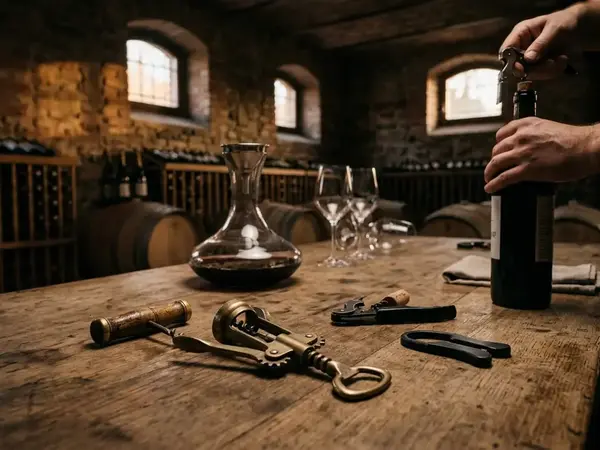
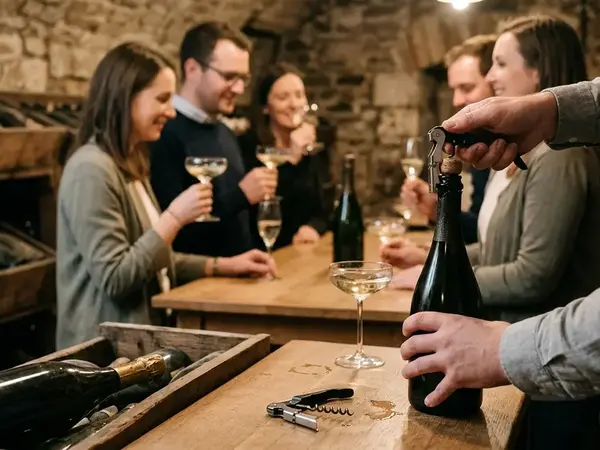
Set a bottle of Etna Bianco on a wooden table at 10–12 degrees Celsius, cool enough for condensation to bead across the glass. Pull the cork and catch the first brief waft of struck flint. Pour immediately, then leave enough wine in the glass to revisit after several minutes.
A plate of grilled squid, prawns, or firm white fish finished with lemon and olive oil gives the wine something precise to work against. Heavily sweet glazes blunt its dry saline line, while the simple char of seafood echoes its smoky edge.
At the first sip, lemon peel and green apple arrive ahead of the ash and herbs. Five minutes later, the matchstick note has widened into flint. Condensation slips toward the stem as a fork lifts a piece of grilled squid, and the wine’s sharp acidity cuts through olive oil and char, leaving the mouth ready for the next bite.