
A Drop of Oil at the Pass
At the pass, a chef tastes scallop crudo, then sips a young Chablis. The scallop is sweet and delicate on its own. Beside the wine, it seems leaner; the Chablis, in turn, tastes sharper. The chef places one drop of olive oil and one flake of sea salt on the next slice. The sommelier takes another bite and another sip. Now the oil gives the wine’s acidity something rich to cut through, while the salt lets more of its fruit come forward.
That small adjustment captures how a wine bar can build a pairing. The chef has kept the scallop and wine the same and changed only the seasoning. A second taste reveals more than a discussion of whether seafood and white wine belong together ever could.
The comparison also depends on handling. Keep raw scallop at 4°C or below until plating, then serve both bites immediately. The point is to taste the bare crudo and the adjusted slice against the same pour, while the difference between them remains as clear as that drop of oil.
High-acid vintages reward this kind of precision. Fat changes the feel of the bite; salt changes how the next sip is perceived. A good pairing brings those effects into balance without burying the ingredient that made the dish appealing in the first place.
How Fat Gives Acidity a Foil
Dry Riesling and Chablis often feel brisk because their acidity prompts salivation. Beside a delicate, lightly seasoned bite, that same energy can leave a lean or drying impression. Add a thin film of fat, and the exchange changes: the bite feels richer, then the wine’s acidity interrupts that richness on the following sip. The mouth feels ready for another bite.
That is palate cleansing in practical terms. The wine has a job to do, and the plate gives it enough texture to do it. A little cultured butter on a warm ingredient, olive oil on raw seafood, or a shaving of cured pork fat can supply that texture. Each brings its own flavor, so the choice should suit the dish as well as the wine.
Start with the thinnest coating
For a small tasting portion, begin with a drop of oil or a shaving of cured fat rather than coating the plate. Taste one bite without added fat, take a fresh sip, then repeat with the adjusted bite and the same wine. If the second sip feels lively and the food still tastes distinct, the fat is doing useful work. If the wine loses its definition behind a greasy finish, pull back.
This fat-and-acid exchange is calibrated here for high-acid, unoaked whites. The same proportion can weigh down a low-acid wine, while a highly tannic wine presents a different balance problem. The unoaked white in the glass sets the boundary for the technique.
There is room for nuance within that boundary. Cultured butter can make a bite feel creamy; olive oil can leave a lighter coating; cured pork fat contributes salt along with richness. Those differences matter most when the underlying ingredient is restrained. On scallop crudo, a drop is easy to assess. Under a heavy dressing, the effect of any one change becomes harder to taste.
Finding the Salt Point for a Sharp White
Salt can soften the perception of acidity in wine, allowing fruit and body to register more clearly. It does not change the wine’s chemical acidity. What changes is the tasting experience after a salted bite.
That distinction matters at the pass. A chef can improve the pairing with a single finishing-salt flake, then flatten it by adding more. The useful question is where the wine becomes fuller while retaining the brisk character that made it worth pouring.
For a two-bite test plate, leave one bite unsalted and put one small flake on the other. Taste the unsalted bite and sip the wine. Then taste the salted bite and sip again from the same glass. Look for a shift from a sharp edge toward clearer fruit, while checking that the food still tastes properly seasoned. This is more reliable than salting the whole plate first and trying to remember what the wine tasted like beforehand.
Make the result repeatable at service
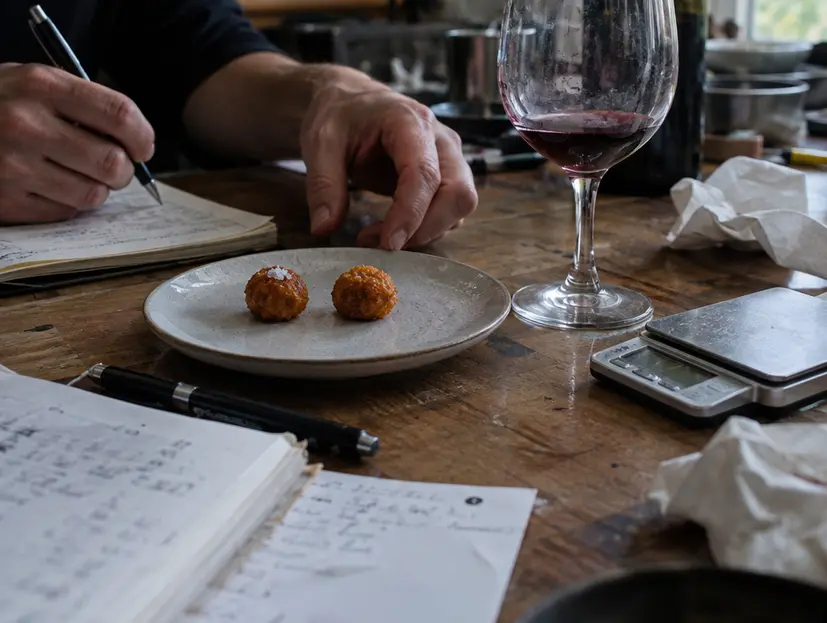
Once the kitchen finds a pleasing level of salt, weighing the amount added across a batch can help keep portions consistent. A scale readable to something like 0.1 g gives the team a useful record; dividing that weight by the number of portions provides a starting point for the next batch.
Final tasting still belongs in the process. Moisture on an ingredient and the size of a salt flake affect how much salt reaches the tongue in a bite. A careful kitchen, including one working at Michelin-starred standards, has to check the plated food against the wine rather than treating a batch average as the finished pairing. The measure helps reproduce an intention; the bite-and-sip test tells the team whether it landed.
Choosing Ingredients and Their Serving Temperature
A small plate needs an ingredient with a clear role. Fresh goat cheese brings tang and creaminess. Raw seafood offers delicate sweetness that can carry a touch of olive oil. A modest slice of citrus-cured meat brings fat and salt together. Each gives a high-acid white a different point of contact, so the same wine can seem taut with one plate and rounder with another.
- Fresh goat cheese: Begin plain so its creamy texture and tang are easy to judge against the wine. Add oil or salt only after tasting that baseline.
- Raw seafood: Keep the seasoning light enough to preserve its delicate sweetness. Compare an untreated bite with one carrying a small amount of oil.
- Citrus-cured meat: Let a modest slice supply richness and salt. If citrus needs emphasis, compare a plain bite with one carrying a little zest before adding juice, which brings more acidity of its own.
Temperature can shift the pairing even when the recipe stays fixed. A chilled bite alongside a cold, high-acid wine may make the whole exchange feel especially taut. A slightly warmer cheese bite can bring its creaminess forward. A hot dish presents another contrast: warmth changes the feel of the food on the palate, so a seasoning choice made while it is hot deserves another taste as the plate cools.
Test the plate through its serving window
For a goat-cheese trial, compare a bite straight from 4–6°C refrigeration with one allowed to reach roughly 12–16°C, alongside wine served at 8–11°C. Keep the cheese, cracker, and pour otherwise consistent. The aim is to find the temperature at which the cheese has enough presence and the wine keeps its lift.
This kind of repeated tasting is central to a rigorous beverage program. A pairing that works at the pass needs to work when a guest takes the next bite, too. Testing the dish at more than one temperature makes that window easier to identify, especially for a small plate whose texture can change noticeably as it sits.
Taste the Change with Chablis and Goat Cheese
The pass-side scallop test translates neatly to a home tasting. Set out two neutral crackers with similar slices of fresh goat cheese, and pour a glass of young Chablis. Season only the second cracker. Keeping the base bites alike makes the difference between them easier to find in the wine.
- Take a bite of the plain goat cheese, then sip the Chablis. Notice whether its acidity feels sharply lean beside the cheese and how much fruit you perceive.
- Add a few drops of good olive oil and a pinch of flaky sea salt to the second cracker. Taste it within 30–60 seconds of the first bite, then sip from the same glass.
- Compare the feel of the cheese and the next sip. The cheese may seem rounder, while the wine’s acid reads as lift for its fruit rather than a sharp edge.
When the balance is right, the Chablis no longer strips the palate. Instead, that single drop of oil and flake of salt act as a bridge, allowing the wine's bright green-apple notes to wash cleanly over the rich, tangy finish of the cheese.