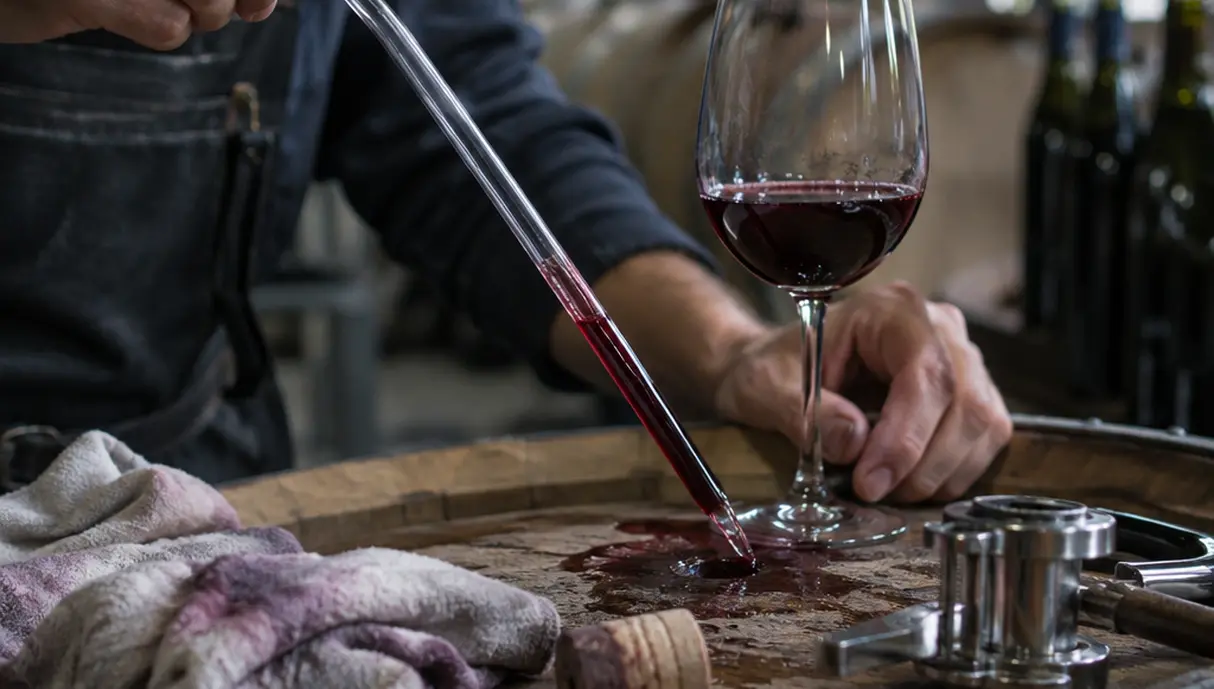
Why the Estate Kitchen Can Reveal More Than the Tasting Bar
The estate kitchen can offer the sharpest expression of a vineyard’s wine. A standing pour establishes the bottle’s character; a carefully paced meal reveals how that character behaves alongside acidity, fat, salt and browned food.
That distinction matters. Cooking does not unlock dormant aromas inside a bottle. Food changes perceived acidity, bitterness and astringency, while serving temperature and aeration influence aroma release. A wine that feels stern before lunch may seem more generous beside a well-judged dish.
The strongest winery restaurants build that relationship into menu development. To assess kitchen–cellar collaboration during harvest or blending, ask for a documented dish revision tied to a vineyard block, fermentation vessel or blending trial. A dated menu beside the corresponding cellar note gives a general claim of collaboration something concrete to stand on.
Here, estate dining means seated, full-service cooking with dishes prepared to order. Purchased charcuterie alongside a tasting flight serves a different purpose.
Compare the Same Glass
For a useful comparison, taste before eating, immediately after a bite, then again after a water rinse. Record acidity, astringency and aroma separately in the tasting notes. This simple sequence offers more useful wine education than a single verdict of “perfect pairing.”
Where the Kitchen Garden Meets the Vineyard Boundary
An estate garden gives the kitchen access to fresh ingredients and a visible harvest calendar. Whether its vegetables share the vineyard’s soil requires a closer look.
Ask where the beds sit, how they receive water and whether the gardeners use imported compost or raised-bed soil. Shared ownership alone cannot establish shared growing conditions. A harvest sheet identifying the bed or orchard, picking date and kitchen delivery date makes produce provenance much easier to follow.
Cover crops and compost loops can connect vineyard and garden management. Flavor bridges, however, are better explained through the ingredients and their preparation than through an assumption that geology supplies matching flavors to wine and vegetables.
| Plate and wine | What to compare | What the comparison reveals |
|---|---|---|
| Coastal greens with a mineral-driven white | Tender lettuce, mustard greens or sorrel, first undressed and then dressed | Pepperiness and sorrel’s acidity make different demands; dressing may account for much of the apparent match. |
| Volcanic-estate roots with a structured mountain red | Boiled beet or carrot against its roasted counterpart | Concentrated sweetness and browned flavors give a stronger explanation for the pairing than the soil label alone. |
At kitchens working through successive garden harvests, menus can change within a week. Book for the cooking approach rather than a photographed signature dish.
What Vine-Cutting Fires Bring to Library Wines
A bundle of Cabernet, Syrah or Sangiovese prunings beside the hearth invites an appealing story. The useful question is where those cuttings enter the fire.
Separate the quick-burning pruning bundle, the sustained ember bed and the final smoke exposure. Thin cuttings behave differently from split hardwood; their presence does not establish that they provide the main cooking heat. Retired barrel staves also need scrutiny: cooking fuel should be clean, untreated and free of coatings, adhesives or chemical contamination.
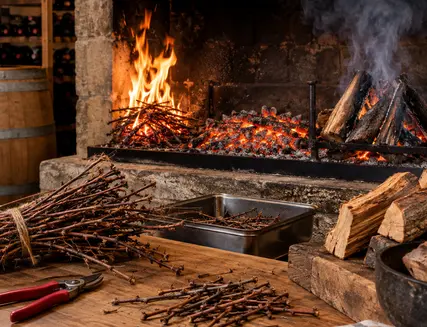
Browned meat and mature wine can make compelling sensory companions. Maillard browning supplies roasted aromas; heavy blackening can introduce bitterness. Leather, cedar and dried-fruit impressions may connect a library wine to the plate, but those notes should first be observed in the glass. Bottle age alone promises none of them.
Keep Smoke Measurable
A useful sommelier-led comparison divides one cooked protein into uncharred, browned and browned-with-smoke portions. Keep salt and sauce constant, use the same bottle and record perceived astringency separately from aroma. Any apparent tannin softening describes the tasting experience, rather than demonstrating a chemical change in the wine.
With a lightly extracted young Pinot Noir, extra smoke can obscure the fruit. The hearth earns its place through calibration—especially when a mature bottle has subtle aromas to preserve.
How to Check an Estate Restaurant Before Booking
A named chef, estate olive oil and a deep cellar make promising signals. Operational details reveal whether the kitchen and winery actually work together.
An outside operator can collaborate closely with an estate; an estate-owned dining room can serve an unrelated menu. Look for people who can explain a current dish against a specific wine, including its fermentation style.
- Find the kitchen team. Is the chef named alongside the winemaker, and who cooks on site?
- Request current menus. Check the dated food menu against the actual pairing list.
- Trace estate ingredients. Ask where the olive oil, vinegar or garden produce comes from.
- Confirm mature-wine pours. Establish whether back vintages come by the glass, require a supplement or sell only by the bottle.
- Check service pacing. Ask about guests per arrival window and the scheduled meal length.
For autumn crush travel, begin checking reservations somewhere around 8–12 weeks ahead as a planning measure. Confirm the restaurant’s release date, deposit and cancellation deadline. Winery guides and seasonal happenings listings can identify possibilities; the restaurant’s current answers should settle the booking.
Nebbiolo and Mushrooms at the Cooling Stone Table
Picture an illustrative late-autumn service: a stone table above harvested Nebbiolo rows, with dusk gathering between the posts. The sommelier pours a small taste of an estate bottling from ten years back, more or less, before the plate arrives. In this glass, damp-leaf and dried-fruit impressions emerge first.
Then come roasted oak-associated porcini, gathered along the property’s oak border and identified by a qualified specialist, with a warm mushroom reduction. After a mouthful, the diner returns to the same glass. The earthy impression now has a companion on the plate.
The cellar doors close behind the sommelier. Against the cooling stone, a forkful of mushrooms waits beside the glass: the quiet impression of an entire season, brought together by garden, kitchen and cellar.