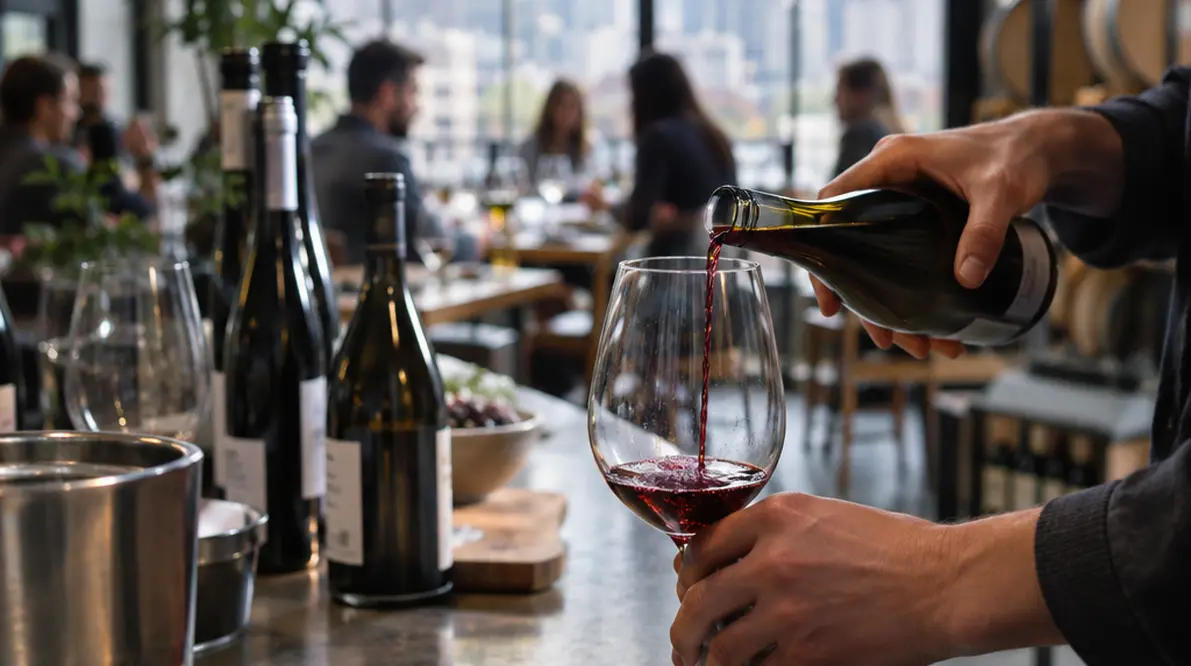
Bringing the Crush Pad to the City Grid
The opening sequence of a metropolitan wine dinner follows the loudest operational clue—the glycol chiller. Its steady hum provides the soundtrack to a bustling Tuesday evening service, where guests dine feet away from active fermentation tanks. This proximity allows urbanites to experience the raw, sensory aspects of winemaking without leaving the city grid. Achieving this atmosphere requires a careful logistical framework to transport freshly harvested grapes from traditional rural vineyards directly into city-center production facilities.
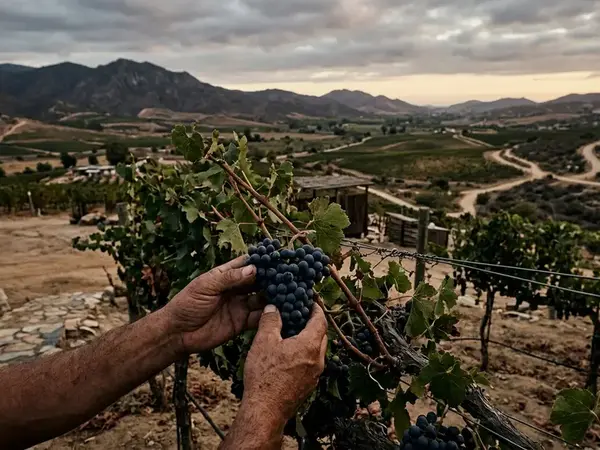
A city-bound harvest load travels in ventilated half-ton macro bins inside a refrigerated trailer. The climate control is maintained roughly between 7 and 13 degrees Celsius, with the actual set point adjusted for the specific grape variety, intended wine style, and transit duration. For vineyards located several hundred kilometres from the crush pad, picking begins before sunrise. This early start accommodates an 8-to-18-hour transport window, ensuring the fruit arrives in condition for same-day destemming or whole-cluster loading.
Once the fruit enters the facility, the rhythm of the cellar dictates the pace of the surrounding space. During vigorous red-wine fermentation, cellar staff perform punch-downs or pump-overs two or three times within 24 hours. A glycol loop continuously removes heat from the jacketed tanks, maintaining the precise temperature required for the yeast. The visual and auditory elements of this process bleed into the dining room, establishing immediately that the restaurant is attached to a functioning production floor rather than simply decorated to resemble a cellar.
Developing Menus From Barrel Samples
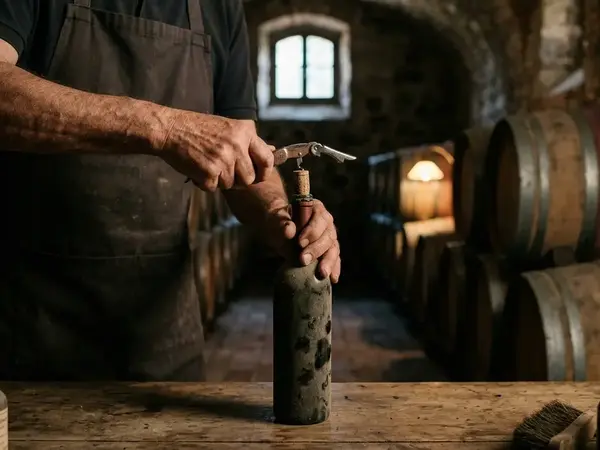
Menu development in an integrated facility starts with the winemaker's barrel sample rather than a finished label description. The executive chef tastes the raw wine for current acidity, tannin texture, oak influence, and fruit concentration. The kitchen team then tests salt, fat, smoke, and sauce reduction against those specific traits. Young red wine served directly from a barrel sample shows firmer tannin and more suspended material than the eventual bottled release. Pairings are assessed again after settling, blending, or several additional months of élevage.
While this level of iterative pairing requires a fully staffed production cellar and restaurant kitchen rather than a simple tasting counter, the results yield highly specific food and wine combinations. A cellar and kitchen team revisit an aging lot every two to four weeks. They draw a small barrel sample and compare it with three to six controlled variations of a sauce, garnish, or cooking method. The dish is tightened, softened, or replaced entirely before the corresponding bottling date.
Scheduling the Chef and Winemaker Tasting
Operational tastings are best held before service in a 30-to-45-minute window. Cooks weigh adjustments and the winemaker presents samples without competing with cellar sanitation or guest orders. This dedicated time keeps the sensory analysis focused on the interaction between the evolving wine and the culinary components.
Managing the Dual-Sourcing Supply Chain
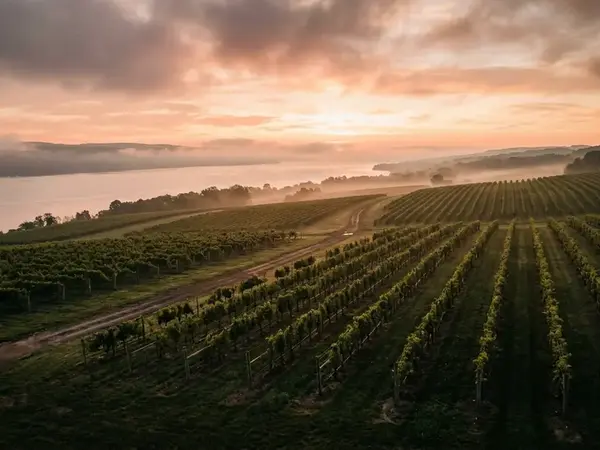
The sourcing strategy for an urban winery divides sharply by what each ingredient contributes to the final experience. Grapes are selected for vineyard climate, soil, variety, and vintage conditions. This often involves navigating American Viticultural Area regulations to secure premium fruit from distant, established regions. Conversely, vegetables, herbs, bread, meat, and dairy are chosen for short replenishment cycles and compatibility with the city's local food culture. Bridging distant terroirs with local culinary traditions creates a distinct dining narrative.
Maintaining temperature control for both delicate produce and incoming fruit bins in a city environment presents significant logistical hurdles. Kitchen produce is commonly received under chilled conditions near 1 to 5 degrees Celsius. Intact wine grapes arrive at a warmer 7 to 13 degrees Celsius. The two loads require separate acceptance checks rather than a single generic cold-chain target to maintain freshness for both streams.
Receiving schedules are staggered to accommodate the different delivery rhythms. Perishable restaurant deliveries occur two to five mornings per week. Grape receiving is compressed into tight harvest windows and brings several bins at once. An urban crush schedule reserves 60-to-90-minute loading slots for each truck. This window covers seal inspection, fruit-temperature checks, bin weighing, sampling, and movement to the destemmer or press. These large deliveries force temporary changes to parking access, staffing, and prep schedules, requiring tight coordination between the front of house and the cellar team.
Engineering the Floorplan for Heavy Production
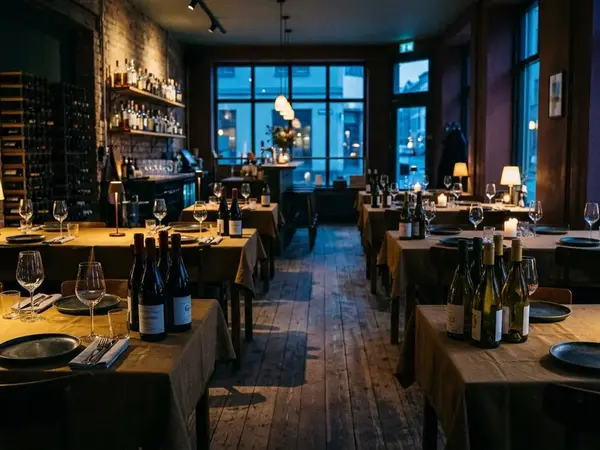
Blending heavy industrial winemaking equipment with sophisticated restaurant aesthetics requires resolving hazards outward. Designers first map wet production zones, forklift movement, chemical storage, carbon-dioxide accumulation, drainage, and emergency egress. Dining tables and decorative lighting are placed only after those critical paths are fixed. Glass is used where guests benefit from seeing the tanks. Sealed partitions, absorptive finishes, and controlled doorways prevent the industrial reality from overwhelming the hospitality experience.
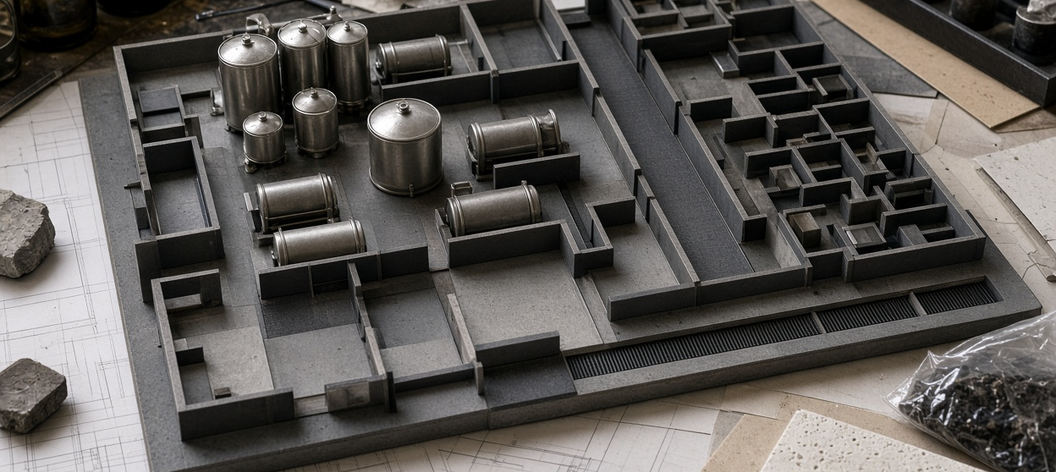
Water management dictates the foundation of the space. Production slabs are pitched approximately 1 to 2 percent toward trench or point drains. This slope ensures press water, lees, and cleaning solution do not collect beside tanks or migrate toward the restaurant floor. Acoustic treatment combines laminated glazing with 50-to-100-millimetre absorptive ceiling or wall panels. This sound control is concentrated near pumps, compressors, bottling equipment, and the glycol system to dampen the mechanical noise.
Housing both a winery and a restaurant safely involves navigating complex urban zoning and commercial building adaptations. A conversion typically requires separate review of winery production, alcohol service, food preparation, occupant load, ventilation, fire separation, accessible routes, wastewater handling, and chemical storage. Approval involves planning, building, fire, health, and alcohol-control authorities to ensure the facility is certified for dual use. Forklift and pallet routes are scheduled strictly outside peak service. Doors or interlocks prevent production vehicles from crossing an occupied dining aisle.
The 10 PM Tank Check
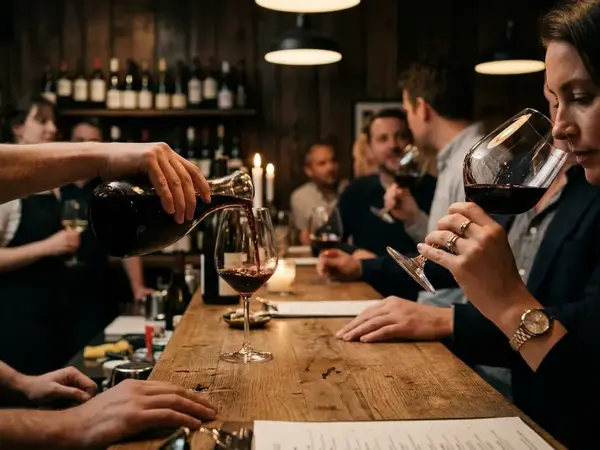
At 10 PM, servers clear the final plates from a long oak table situated directly beneath towering stainless steel tanks. The cellar master steps behind the hospitality line to perform a late tank round, taking 5 to 15 minutes per active lot. They check the temperature, valve position, visible leakage, fermentation activity, and glycol response. A sommelier pours a measured 30-to-45-millilitre digestif for the lingering guests. Sanitation and forklift movement remain paused until the final patrons leave the production-adjacent area. Between 10:00 and 10:30 PM, front-of-house staff reset glassware and close checks while the cellar equipment continues cycling automatically in the background and fermentation continues through the night.