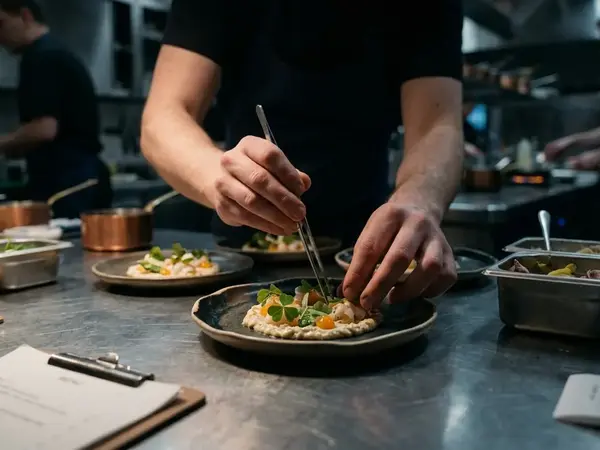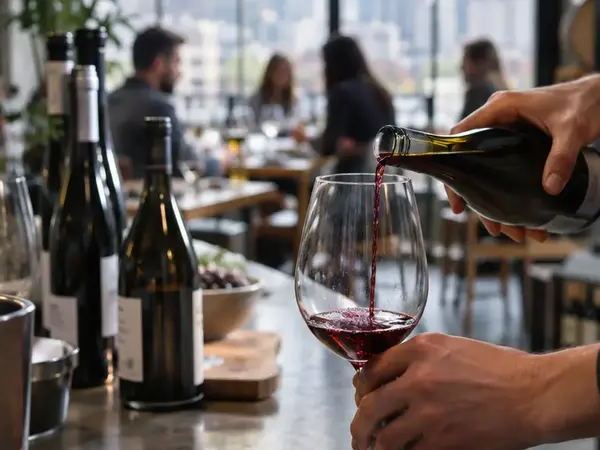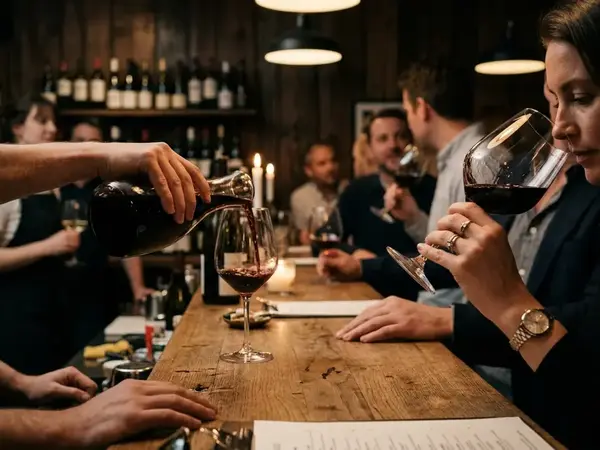
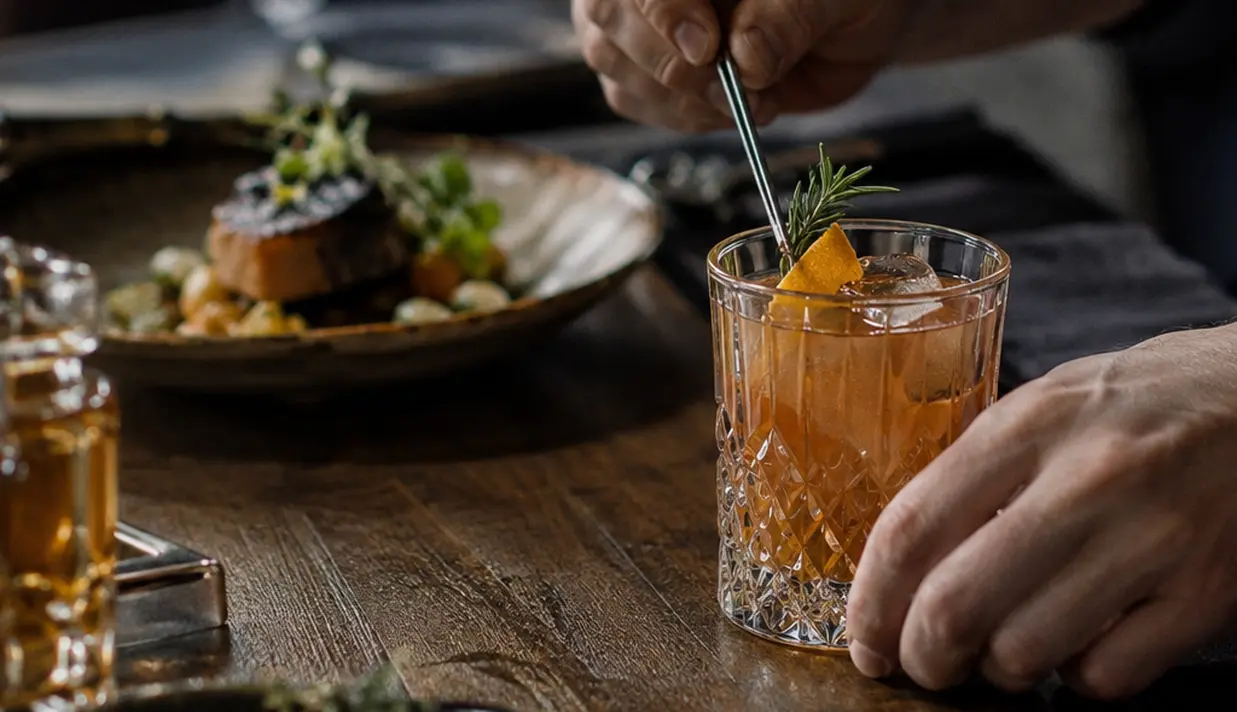
Nothing derails a celebratory dinner quite like ordering a prized bottle of wine, taking a bite of a seasonal appetizer, and watching the next sip collapse into a flat, metallic, or cloyingly sweet shadow of itself. In the dining room, sommeliers refer to these challenging ingredients as culinary wine killers—or, more precisely, organoleptic antagonists. These are specific foods that alter how the subsequent sip registers on the palate.
The Chemistry of Culinary Wine Killers on Dining Menus
Receptor modulation, volatile aroma clashes, acid mismatches, and trigeminal irritation operate through entirely separate biological pathways rather than one universal chemical reaction. Because of this, the artichoke–asparagus–vinaigrette breakdown requires three distinct pairing decisions to address sweetness modulation, green-sulfur aroma, and acetic pungency.
Three primary culprits dominate upscale menus:
- Cynarin in artichokes: A compound associated with sudden sweetness shifts on the tongue.
- Green and sulfurous volatiles in asparagus: While asparagusic acid is well known for producing sulfurous metabolites after digestion, it is the vegetable's immediate green volatiles and mercaptans at the table that clash with oak and tannin.
- Acetic acid in sharp vinaigrettes: A pungent acid that strips lower-acid wines of their fruit profile.
Evaluating these clashes requires a disciplined service protocol. Our editorial tasting panel tests food pairings in active restaurant conditions using small wine pours, repeating the food-to-wine sequence—including another pass after the wine has opened up in the glass. We log artichoke preparation, asparagus cooking method, and dressing composition separately, because a fried Roman artichoke with lemon mayonnaise poses a vastly different structural puzzle than an herb-marinated artichoke heart in vinegar. Even under controlled wine education protocols, individual genetic sensitivity to bitter compounds like 6-n-propylthiouracil (PROP) varies substantially from diner to diner, though PROP sensitivity alone does not automatically predict which bottle a guest will prefer.
Neutralizing Cynarin in Artichoke Dishes with Dry Flor Sherry
Eat a steamed artichoke leaf, take a sip of plain water, and the water will inexplicably taste sweet. This phenomenon, explored in classic sensory research on artichoke cynarin and sweet taste perception, happens because cynarin temporarily modulates sweet taste receptors on the tongue. When the next sip of liquid washes across the palate, the release of that inhibition tricks the brain into perceiving a sudden rush of sweetness.
If you pour a ripe, fruit-forward wine or an off-dry bottle alongside roasted or fried artichokes, this sweet-flash distorts the tasting notes into something syrupy and hollow. Heavily oaked Chardonnay and high-tannin Cabernet Sauvignon fare even worse, turning jarring and astringent against the vegetable's vegetal core.
The solution is Fino or Manzanilla Sherry. Aged beneath a living veil of flor yeast, these fortified wines develop a bone-dry, savory profile driven by high levels of acetaldehyde, giving the cynarin effect almost no overt fruit sweetness to distort. Follow this three-step ordering strategy when artichokes hit the table:
- Request a fresh bottle of Fino or Manzanilla: Remember that these are dry fortified wines sitting around 15–17% alcohol by volume, so treat them with the respect of a full-bodied pour rather than a light aperitif.
- Verify the service temperature: Ask for the sherry to be served chilled at 7–9°C in a small white-wine glass, which concentrates its almond, saline, and yeast aromas alongside the food.
- Match the preparation weight: Pair delicate Manzanilla from Sanlúcar de Barrameda with steamed or raw shaved artichoke salads, and save more structured Fino from Jerez for crispy, deep-fried preparation styles.
Artichoke Ordering Guardrail
Skip rich, oak-aged whites and plush reds when artichokes arrive; anchor the course with a chilled glass of flor-aged Fino or Manzanilla to reduce the sweet-flash distortion.
Countering Asparagus and Green Vegetable Bitterness with Grüner Veltliner
Asparagus demands that you make the kitchen's cooking method your very first ordering criterion. When green vegetal compounds and volatile sulfur aromatics meet heavy red tannins or sweet vanilla oak lactones, the combination frequently triggers an unpleasant, tinny, or canned-vegetable aftertaste. Austria's signature white grape, Grüner Veltliner, offers an alternative.
Grüner Veltliner thrives alongside green vegetables because it contains rotundone—the exact same aroma compound responsible for the cracked white pepper notes in Syrah—creating an aromatic link over brisk malic acidity. Before choosing a bottle from the list, ask the sommelier whether the wine was raised in stainless steel, neutral large wood (fuder), or new small barrels; vessel aging tells you far more about potential oak clashes than the region alone.
Once the plate arrives, compare a bite of the bare asparagus spear with a second bite carrying its sauce before deciding whether crispness or body matters more:
- For steamed or blanched asparagus: Prioritize a light, unoaked Wachau Grüner Veltliner at the Steinfeder level (which caps alcohol at a maximum of 11.5% ABV) or a classic Loire Valley Sancerre. Their brisk, herbal lift echoes the pure vegetable without weighing it down.
- For chargrilled asparagus with hollandaise: Step up to a fuller Wachau Smaragd bottling (which starts at 12.5% ABV). The extra dry extract and texture stand up to the Maillard browning of the grill marks and the rich emulsified butter of the hollandaise.
Matching Acetic Acid in Heavy Vinaigrettes and Fermented Starters
Acid matching follows an unforgiving rule at the table: if the dish on the plate carries higher perceptible acidity than the wine in the glass, the wine will immediately taste flabby, hollow, and stripped of its fruit. Many standard table wines fall approximately within a pH range of 3.0 to 4.0, whereas culinary vinegars commonly sit around pH 2 to 3 and are bottled at 5–7% acetic acid concentration. While olive oil, salt, and food proteins buffer and dilute that sharpness on the plate, a heavy-handed sherry-vinegar salad, citrus-cured ceviche, or pickled crudo garnish will still overwhelm a soft Chardonnay or Merlot.
Why do vinegar dressings feel harsher than lemon juice alone? Unlike the non-volatile citric and malic acids found in fruit, acetic acid is volatile, meaning it lifts off the plate and triggers pungent nasal and trigeminal sensations alongside sour taste receptors. To keep your palate refreshed at meals that feature raw bars and fermented starters, reach for high-acid, low-pH wines:
- German Dry Riesling (Trocken): Delivers razor-sharp acidity with crystalline citrus and slate notes that mirror pickled garnishes.
- Santorini Assyrtiko: Offers volcanic salinity and a firm, phenolic structure that holds its ground against both wine vinegar and olive oil.
- Basque Txakolina: Brings mouthwatering tartness and a gentle prickle of dissolved carbon dioxide that cuts right through raw fish marinades.
When ordering salads or crudo, ask the server whether the kitchen dresses the dish with citrus, wine vinegar, or a combination of both. Requesting the dressing on the side allows you to test one lightly dressed bite against a fully dressed forkful, revealing immediately whether the acid load is coming from the vinaigrette or the garnish.
Navigating Chili Heat, Egg Yolks, and Umami-Rich Reductions
Diner intuition often lumps spicy chilies and rich egg yolks together as heavy palate-coaters, yet they require opposite structural mechanics from a wine list. Capsaicin in chili peppers activates heat-sensitive trigeminal nerve endings in the mouth. Ethanol amplifies that burning sensation and makes grape tannins taste fiercely astringent. Runny or cured egg yolks in dishes like carbonara or steak tartare coat the tongue in dense lipid proteins, muting delicate aromatics until a burst of acidity and effervescence scrubs the palate clean.
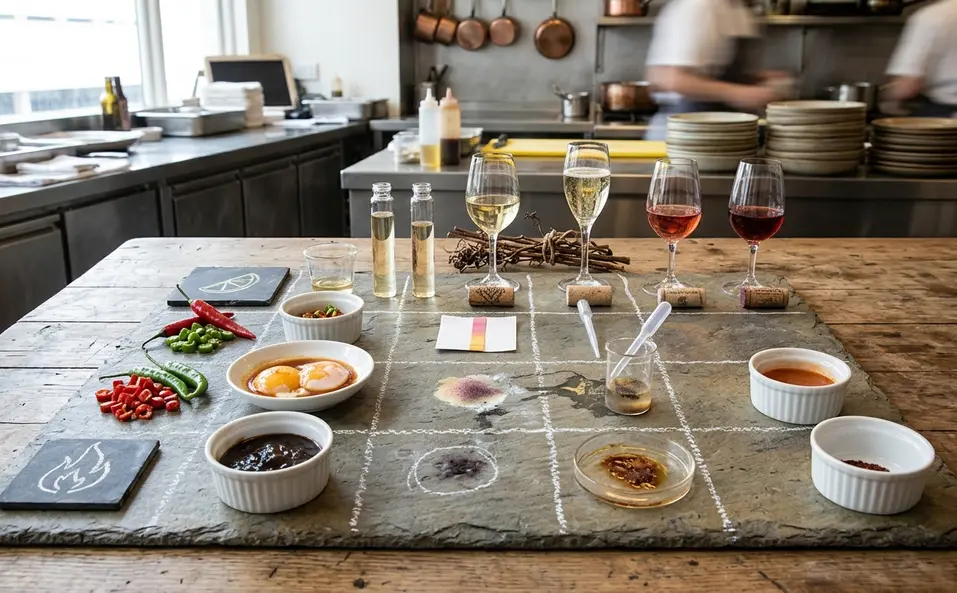
When a single table orders across both spectrums, separate your wine strategy by structural role:
- To tame chili heat: Look for a low-alcohol, slightly off-dry German Riesling sitting around 7.5–10% ABV. While residual sugar does not chemically neutralize capsaicin, sweetness softens the brain's perception of oral burning while low alcohol prevents fanning the flames. Always confirm the exact sweetness level with the sommelier when ordering a Kabinett Riesling; in German wine law, Kabinett denotes grape ripeness at harvest rather than a guaranteed level of residual sugar, and many modern producers ferment them completely dry.
- To cut through egg yolks and umami: Pour a traditional-method sparkling wine served at 8–10°C. Evaluate the wine against the complete bite—including salty Pecorino, cured guanciale, mustard, or black pepper—so the high acidity and brisk carbonation lift the fat while framing the savory umami depth.
Kabinett Ripeness Check
Verify the residual sugar with your sommelier before ordering a Kabinett Riesling for spicy dishes, as the label term indicates harvest ripeness rather than guaranteed sweetness.
Why Traditional-Method Brut Nature Sparkling Wine Works Across a Varied Menu
When a table orders fried artichokes, grilled asparagus with hollandaise, raw-bar crudo, and spicy appetizers all at once, consider a bottle of traditional-method Brut Nature sparkling wine from Corpinnat, Cava, or Champagne. It offers a versatile option for several of these challenging pairings.
The mechanics come down to shared structural demands. Fine-beaded effervescence provides physical contrast to fried coatings and rich egg emulsions, refreshing the palate between bites. High natural acidity stands alongside sharp vinaigrettes and citrus marinades. The Brut Nature category permits less than 3 g/L of residual sugar with zero dosage added after secondary fermentation—giving artichoke cynarin virtually no sugar to distort, unlike standard Brut sparkling wines that permit up to 12 g/L of sugar. A bottle that handles fried artichoke and hollandaise still faces a separate test from the table's hottest chili bite and strongest vinegar dressing.
Order your Corpinnat, Cava, or Champagne Brut Nature explicitly by category name, ask the sommelier to start service at 8–10°C, and let the wine evolve in the glass for 10–15 minutes as the courses arrive. Put the bottle through three diagnostic bites—a bare piece of artichoke, a spear of asparagus with its sauce, and the sharpest dressed forkful on the table—and compare how each changes the next sip.