The glass in front of you might pour as pale as straw with a piercing, briny snap or as dark as mahogany with the weight of roasted walnuts. Every bottle of dry sherry begins as a quiet, neutral white wine. Evaluating it requires recalibrating your palate to recognize the effects of yeast metabolism, atmospheric humidity, and slow oxidation.
Inside the Cathedral Cellars of the Jerez Triangle
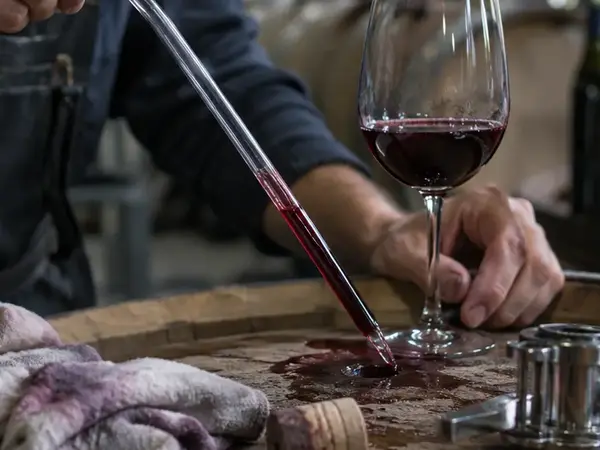
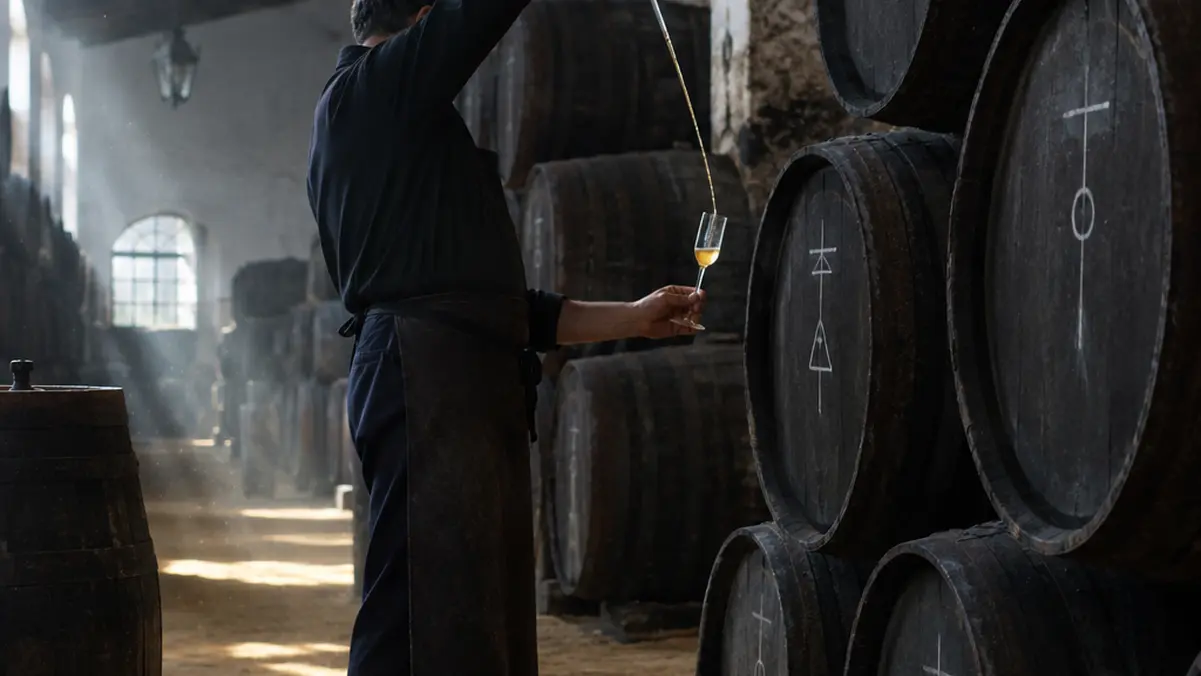
Beneath the high, timbered roof of a bodega in Jerez de la Frontera, a venenciador steps up to a row of stacked barrels. He lowers the slender silver cup of a venencia through the bunghole of a chalk-marked American oak butt, breaking through the surface film to draw a pale, bone-dry sample. Raising his arm high, he pours a long, unbroken stream from waist height into a narrow copita. That dramatic arc exposes the wine to air and wakes up its volatile aromatics, letting the cellarmaster examine its color, aroma, and condition in seconds.
Every nuance in your tasting notes traces back to the bright white albariza soil of southern Spain. Rich in chalk, albariza stores winter rainfall deep in its porous structure while its pale, drying surface crusts over to reduce summer moisture loss. This sustains the Palomino grape through blistering Andalusian summers. In the winery, the pressed Palomino juice ferments completely dry. The resulting base wine is low in acid, delicate, and neutral—a blank canvas waiting for the cellarmaster's chalk mark.
What happens next comes down to spirit and headspace. During the initial classification, the cellarmaster fortifies the dry Palomino base with neutral grape spirit, choosing one of two paths:
- The Biological Path: The finest, lightest pressings are fortified to approximately 15 to 15.5% ABV. They age in traditional 600-liter butts filled to only about 500 liters, leaving a two-fist headspace of air so a living veil of yeast can colonize the surface.
- The Oxidative Path: Richer, more structured base wines are fortified directly to approximately 17 to 18% ABV. That higher alcohol level suppresses the surface yeast, leaving the wine to age in direct contact with oxygen inside the porous oak.
Both styles mature inside the fractional blending network documented in regional winery guides: the solera system. Wine for bottling is drawn only from the oldest, floor-level tier of barrels, known as the solera itself. That missing volume is replenished with slightly younger wine from the supporting tiers stacked above, called criaderas, preserving a consistent house style across decades.
How the Living Veil of Flor Shapes Biological Aging
Biological aging relies on a fascinating contradiction. The native biofilm of yeast strains known as flor requires abundant oxygen to survive, yet its thick, wrinkled blanket completely shields the wine beneath it from direct oxidation. That is why bodegas leave roughly 100 liters of open air at the top of a biological-aging butt instead of topping the barrel completely.
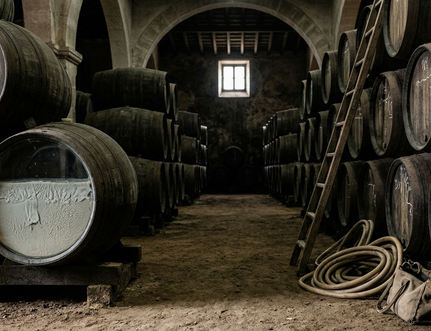
Unlike primary fermentation, flor develops exclusively at the wine-air interface. Because primary fermentation has already exhausted the grape sugars, these alcohol-tolerant film-forming yeasts survive at an alcohol level in the range of 15 to 15.5% ABV by metabolizing components of the wine itself. They consume ethanol, acetic acid, and—crucially for the taster—residual glycerol.
Decoding the Glycerol Split on Your Palate
Glycerol is a natural byproduct of fermentation that contributes viscosity and roundness to wine. As the flor feeds on that glycerol, it strips the Palomino base of its cushion. On the palate, this creates a lean, razor-sharp, saline texture with zero softness. At the same time, the yeast metabolism releases high concentrations of acetaldehydes, the chemical compounds responsible for the bruised green apple, dried chamomile, and sourdough crust aromas that leap from the glass.
When I set up vertical flights or blind tasting lineups for wine education sessions, I ask tasters to assess this acetaldehyde pungency in two distinct stages. Take a short, cautious first sniff before swirling the glass to catch the raw, volatile yeast notes right off the surface. Then swirl gently to aerate the wine and take a second, deeper inhalation; the initial prickle settles, revealing layers of baker's yeast, citrus pith, and wet chalk underneath.
Tasting Fino Against Manzanilla: Inland Heat Versus Coastal Humidity
To understand how cellar climate alters flor behavior, pour a Fino and a Manzanilla side by side. Set up the comparison using similarly aged bottlings, identical tulip-shaped white wine glasses, and an equal serving temperature between 7 and 9°C so that neither warmth nor bottle age skews your perception.
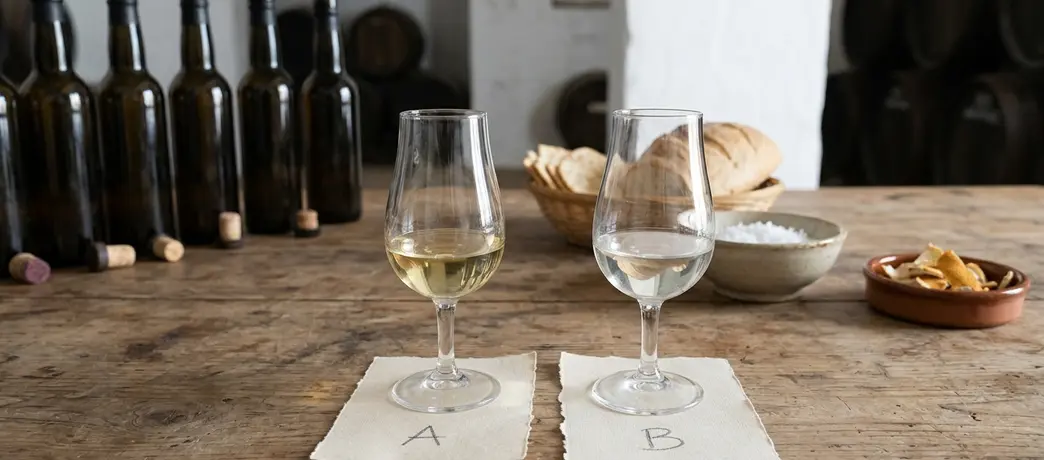
Tasters often reduce this flight to a simple inland-versus-coastal divide, but the geography of the Sherry Triangle requires more precision. While Jerez de la Frontera sits inland, Fino also matures in the coastal port of El Puerto de Santa María. Meanwhile, Manzanilla ages exclusively in the coastal town of Sanlúcar de Barrameda, situated where the Guadalquivir River meets the Atlantic Ocean, as certified by the Consejo Regulador de las Denominaciones de Origen Jerez-Xérès-Sherry y Manzanilla-Sanlúcar de Barrameda. Sanlúcar's combination of river estuary humidity and cooler Atlantic breezes moderates seasonal temperature swings in the cellars, supporting persistent, thick flor activity year-round.
Side-by-Side Sensory Markers
Evaluate your two chilled samples systematically before deciding which style you prefer:
- Assess the Manzanilla first: Look for a very pale straw hue with greenish reflections. Because the Sanlúcar flor stays thick through both summer and winter, it consumes even more glycerol and shields the wine aggressively. Record notes of dried chamomile, fresh dough, a delicate, feathery lightness on the mid-palate, and a brisk, sea-spray saline finish.
- Move to the Fino: Notice the slightly deeper straw-gold tone. In the warmer inland cellars of Jerez (and slightly more variable conditions in El Puerto), the flor veil naturally thins during the peak heat of summer and mid-winter. This gives Fino a slightly broader structure on the palate, trading floral delicacy for savory weight: toasted Marcona almond, warm baker's yeast, and green olive brine.
Protect Biological Freshness: Treat standard Fino and Manzanilla like fresh, unfortified white wines. Once opened, cork the bottle promptly between pours, store it upright in the refrigerator, and finish it within a 2-to-3-day drinking window before the delicate acetaldehydes flatten out.
Amontillado and the Transition from Yeast to Oxygen
Amontillado bridges the two cellar worlds. Every true Amontillado starts its life biologically as a Fino or a Manzanilla resting under a veil of flor. After several years, one of two things happens: either the aging wine exhausts the nutrients the yeast needs to survive, or the cellarmaster deliberately fortifies the wine up to approximately 17% ABV or higher. That spike in alcohol kills off the flor veil, letting it sink to the bottom of the butt and exposing the wine directly to the air inside the barrel.
Deprived of its protective yeast blanket, the pale wine slowly oxidizes through the porous American oak. Its color deepens from straw to glowing topaz and dark amber. Note that while amber color confirms oxidative maturation, its shade alone does not establish a precise age in years, as base wines and cellar conditions vary across bodegas.
Dividing the Sip Into Entry and Finish
Pull your Amontillado from the chiller earlier than a Fino; a serving temperature of 12 to 14°C gives a practical starting point for evaluating its biological pungency alongside its deeper oxidative aromas. On the nose, the green apple and dough notes of the Fino phase recede, replaced by roasted hazelnut, dried apricot, cured tobacco leaf, and warm baking spices.
To evaluate Amontillado accurately on the palate, divide your attention between the initial attack and the post-swallow finish. Because the flor consumed the wine's glycerol during its early biological years, the entry remains lean, tangy, and sharply saline. Then, as you swallow, the oxidative concentration takes over, expanding into a concentrated, nutty persistence that lingers for minutes. That contrast—savory tension up front followed by rich nutty length—is the structural signature of dual aging.
Evaluating Oloroso and the Power of Pure Oxidative Aging
Oloroso never sees a veil of flor. From the very beginning, the cellarmaster selects richer, more structured Palomino pressings—often from warmer inland vineyards or fuller press fractions—and fortifies them directly to approximately 17 to 18% ABV. Because that alcoholic strength prevents a sustained flor phase from ever forming, the wine spends years or decades in slow, uninterrupted contact with oxygen.
Here the glycerol split comes full circle. With no yeast film present to metabolize the wine's natural glycerol, Oloroso retains all of that viscosity-building compound. As water evaporates slowly through the wood, the glycerol, acidity, and dry extract concentrate side by side. The result is a deep autumn-mahogany wine with a broad, velvety, enveloping mouthfeel.
Separating Texture from Sweetness
The biggest mistake tasters make when evaluating a classic Oloroso is confusing glycerol weight and oxidative aromatics with residual sugar. Your eyes see a dark mahogany liquid; your nose picks up balsamic reduction, toasted walnut, worn leather, and roasted coffee; your palate feels a plush, mouth-coating viscosity. Together, those cues trick the brain into expecting a sweet dessert wine.
To prevent this sensory illusion, take two separate sips when tasting a dry Oloroso at 12 to 14°C in a standard white wine glass with enough bowl space to let the aromas expand. Use the first sip exclusively to register the physical texture—that round, glycerol-rich weight across the tongue. Take a second sip and focus strictly on the finish after swallowing. A genuinely dry Oloroso will finish completely clean, savory, and bone-dry, with a pleasant phenolic grip and notes of toasted autumn leaves. That savoury richness makes Oloroso a natural anchor for autumn food pairings, standing up effortlessly to braised oxtail, wild mushrooms, or aged sheep's milk cheeses.
As decades pass in the solera, moisture slowly evaporates through the oak staves, yet the exact balance of water and ethanol lost through this evaporation depends heavily on cellar humidity and storage conditions, so neither rising alcohol nor a fixed rate of acid concentration follows automatically from oxidative aging. In drier inland bodegas where water evaporates faster than spirit, however, a rare, decades-old Oloroso can naturally concentrate until it reaches a staggering 20 to 22% ABV without a single drop of additional fortification.