Buying En Primeur Secures Wine Before Bottling
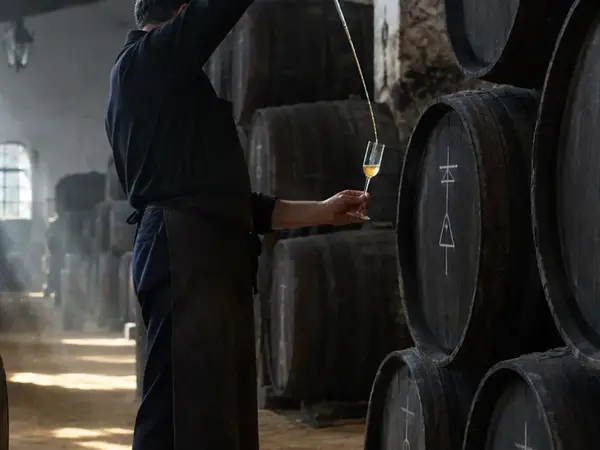
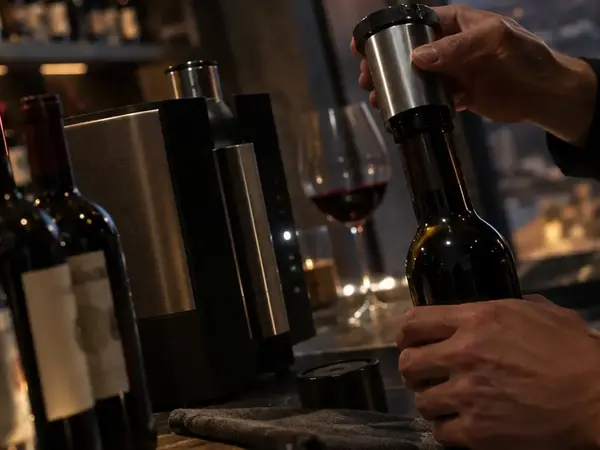
En primeur, also called wine futures, means paying for unbottled wine while it matures in the producer’s cellar, commonly in oak barrels, with delivery following bottling. The attraction is early access: a buyer can reserve a particular estate, vintage and bottle format before the finished wine reaches ordinary retail shelves.
In Bordeaux, the campaign generally takes place in the spring following harvest. The commercial chain runs through the Place de Bordeaux: a courtier brokers transactions between an estate and négociants, which distribute allocations to international wine merchants. The customer places an order with the merchant.
That payment secures a contractual entitlement to future delivery. Identifiable bottles in a warehouse come later—a distinction that matters when assessing ownership and financial exposure.
Entry need not involve a grand cellar budget. Merchant campaigns can include smaller cases and individual-bottle offers, giving enthusiasts access alongside established collectors. Availability follows the estate, format and merchant’s allocation.
The buying and tax mechanics below follow Bordeaux purchases through a UK merchant into UK bonded storage; buyers elsewhere should establish their local arrangements before applying the cost calculation.
Choose the Merchant Before Choosing the Château
Merchant financial resilience deserves priority over persuasive tasting notes. Payment precedes delivery, leaving the buyer exposed to the business responsible for fulfilling the order while the wine remains at the estate.
Start with the legal entity taking payment. Compare its incorporation history with claims about trading longevity, then inspect recent filed accounts for recurring losses, weak net assets and overdue filings. A familiar trading name needs the same scrutiny as a newer merchant.
Ask which established négociant relationships support the offer and obtain written confirmation that an accepted order has a secured allocation behind it. Longstanding relationships provide useful context; the contractual arrangements determine the buyer’s position.
- Allocation: What confirms that the merchant has secured the wine being sold?
- Advance payments: How are customer funds held, and what protection does any claimed ring-fencing provide?
- Title: At what point does ownership transfer to the customer?
- Stock identification: How will the warehouse identify the customer’s bottles after arrival?
Arrange temperature-controlled bonded storage before arrival. A merchant-managed account can provide this without requiring a separate direct warehouse account. Ask about protection from light, vibration and temperature fluctuations, together with insurance and withdrawal procedures. Bonded status defers relevant duty and VAT; insolvency exposure requires its own assessment.
Read Barrel Notes for Structure and Drinking Intent
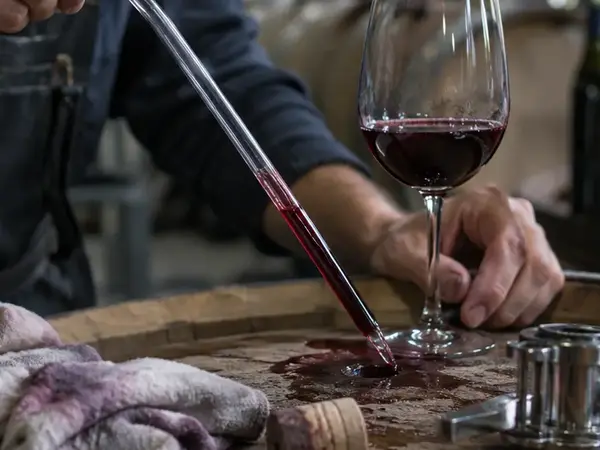
Read the description before the score. Barrel samples show unfinished wine, often with prominent tannin and acidity, and the assessment concerns how fruit, freshness and structure fit together during development. A scoring range expresses a provisional judgment about that wine.
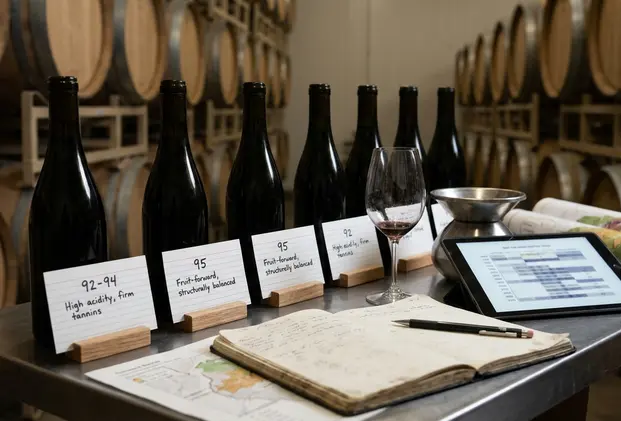
Compare independent tasting reports for the same estate and vintage. Record tasting dates and distinguish barrel assessments from finished-bottle reviews. Agreement on fine-grained tannin and sustained freshness can be more useful to a buying decision than agreement on a numerical bracket.
Harvest conditions help explain those sensations. Dry weather and small berries may account for concentration; rain near picking directs attention toward harvest dates and sorting. Read yield information alongside blend composition and picking decisions. Low yield describes output per area, while the tasting note addresses what reached the glass.
Match the Allocation to Its Eventual Use
For personal drinking, prioritize grape preference, estate style and the patience required by the suggested drinking window. A wine intended for mature, savoury food pairings may demand a different cellar commitment from one chosen for earlier fruit-led drinking.
Buying for resale introduces another question: how readily might another buyer want that exact wine and format? Keep personal enjoyment separate from expectations about secondary-market liquidity. Liv-ex fine wine market analysis offers market context for that comparison.
Build the Cost from In-Bond Invoice to Doorstep
The in-bond price is the starting line of the budget. Obtain the merchant’s written definition: bottle count, packaging and whether transport to the UK bonded warehouse is included. Check the wooden-case specification where it forms part of the offer.
Then separate the costs by when they arise. Storage accumulates according to the account’s billing terms. Physical withdrawal brings excise duty, applicable VAT and final delivery into the calculation. Request a quote for temperature-controlled delivery rather than assuming the campaign invoice covers the journey home.
A Six-Bottle Budget, Layer by Layer
For an illustrative budget, take six 750 ml bottles at £300 in bond, including transport to the bonded warehouse. Assume storage costs £18 per case-year and final delivery costs £24, both VAT-inclusive. Two billed storage years produce this running total:
- Wine and transport into bond: £300.
- Storage: £36.
- Final delivery: £24.
- Subtotal before withdrawal duty and VAT: £360.
Add excise duty using the applicable rules and rate when the wine leaves bond. Ask the merchant to show the withdrawal VAT calculation separately, including its taxable base. The calculation should distinguish the wine purchase value, duty and any other taxable charges rather than automatically substituting the wine’s current market value.
Finally, compare the delivered total with an available back vintage’s tax-paid asking price, including its delivery charge. Check storage history and bottle condition on that alternative. An older wine already approaching its drinking window can offer a compelling purchase when the release price, waiting period and storage bill are considered together.
Prepare a Capped Wish List Before Releases Begin
Bordeaux estates release offers at different points during the spring campaign. Some use successive tranches, with prices that may rise, remain unchanged or fall. Treat each offer as a fresh price decision rather than assuming the opening release ensures the lowest eventual cost.
Send the merchant’s account manager a ranked wish list before opening prices arrive. Specify estate, vintage, quantity, bottle format and maximum in-bond spend. Establish whether that list expresses interest or authorizes a purchase within the stated ceiling.
“First choice: six 750 ml bottles; maximum £300 in bond; no substitution or larger format without approval.”
For half-bottles or magnums, state the format explicitly and ask about availability, minimum case size and bottling surcharges. When an offer arrives, check it against the delivered budget and back-vintage comparison, then follow its stated response and payment deadlines. Keep the acceptance, receipt, expected arrival window and eventual warehouse stock record together.
Contact a vetted merchant offering bonded storage today, open an in-bond cellar account, and register a ranked estate wish list with a firm maximum budget ahead of the next spring release window.